Editor’s Selection: Lab Coats in Hollywood: Science, Scientists and Cinema
Sep0

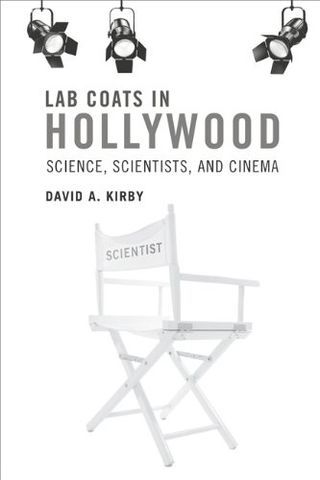
Lab Coats in Hollywood: Science, Scientists and Cinema book cover ©2011 MIT Press, all rights reserved
Read through any archive of science fiction movies, and you quickly realize that the merger of pop culture and science dates as far back as the dawn of cinema in the early 1920s. Even more surprising than the enduring prevalence of science in film is that the relationship between film directors, scribes and the science advisors that have influenced their works is equally as rich and timeless. Lab Coats in Hollywood: Science, Scientists, and Cinema (2011, MIT Press), one of the most in-depth books on the intersection of science and Hollywood to date, serves as the backdrop for recounting the history of science and technology in film, how it influenced real-world research and the scientists that contributed their ideas to improve the cinematic realism of science and scientists. For a full ScriptPhD.com review and in-depth extended discussion of science advising in the film industry, please click the “continue reading” cut.
Top 10 Science and Technology Game Changers in Film
Jun3

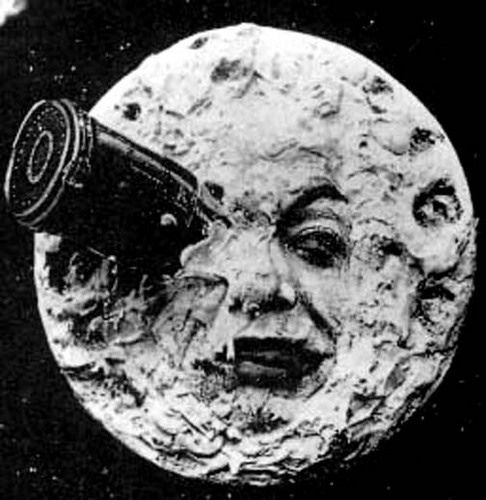
Le Voyage Dans la Lune, (A Trip To The Moon), released in 1902, is widely considered to be the first sci-fi film ever made. We've come a long way since then!
I was recently watching Wall Street: Money Never Sleeps, the sequel to the Oscar-winning 1987 financial cautionary tale. In the middle of a movie that had nothing to do with science, the lead character started explaining the financial investment potential of a national research facility loosely based on the ultra-exclusive National Ignition Facility in Livermore, CA (which ScriptPhD.com was fortunate to visit and profile recently). The film did such an impressive job of explaining the laser technology being used in real life to harness endless quantities of energy from a molecular fusion reaction that it could have easily been lifted from a physics textbook. Translating, explaining and visually presenting complex science on film is not an easy task. It got us to thinking about some of the greatest science and technology moments of all time in film.
In no particular order, with the help of our readers and fans, here are ScriptPhD.com’s choices for the Top 10 gamechangers of science and/or technology cinematic content that was either revolutionary for its time, was smartly conceived and cinematically executed, or has bared relevance to later research advances.
From The Lab: Google World Science Fair and a New Generation of Idea-Makers
Apr0

The Google Science Fair: the first-ever global internet science competition is sure to have a tremendous impact on science education and innovation.
In his State of the Union speech in January, US President Barack Obama proclaimed that “we need to teach our kids that it’s not just the winner of the Super Bowl who deserves to be celebrated, but the winner of the science fair.” A noble (and correct) assessment, to be sure, but one mired in numerous educational and cultural obstacles. For one thing, science fairs themselves are at a perilous crossroads. A New York Times report issued in February stated that not only is participation in science fairs among high school kids falling, but that the kind of creativity and independent exploration that these competitions necessitate is impossible under current rigid test-driven educational guidelines for teaching mathematics and science. Indeed, an interesting recent Newsweek article on “The Creativity Crisis” conveyed research studies showing that for the first time, American creativity is declining. How appropriate, then, that this April (national math education month) brings the culmination of the Google World Science Fair, the first ever competition of its kind transpiring online and open to lab rats from all over the globe. ScriptPhD.com discusses why this could be a game-changer for the next generation of young scientists, under the “continue reading” cut.
EDITOR’S CHOICE: It’s Not Easy Being Green: Cool It!
Nov1

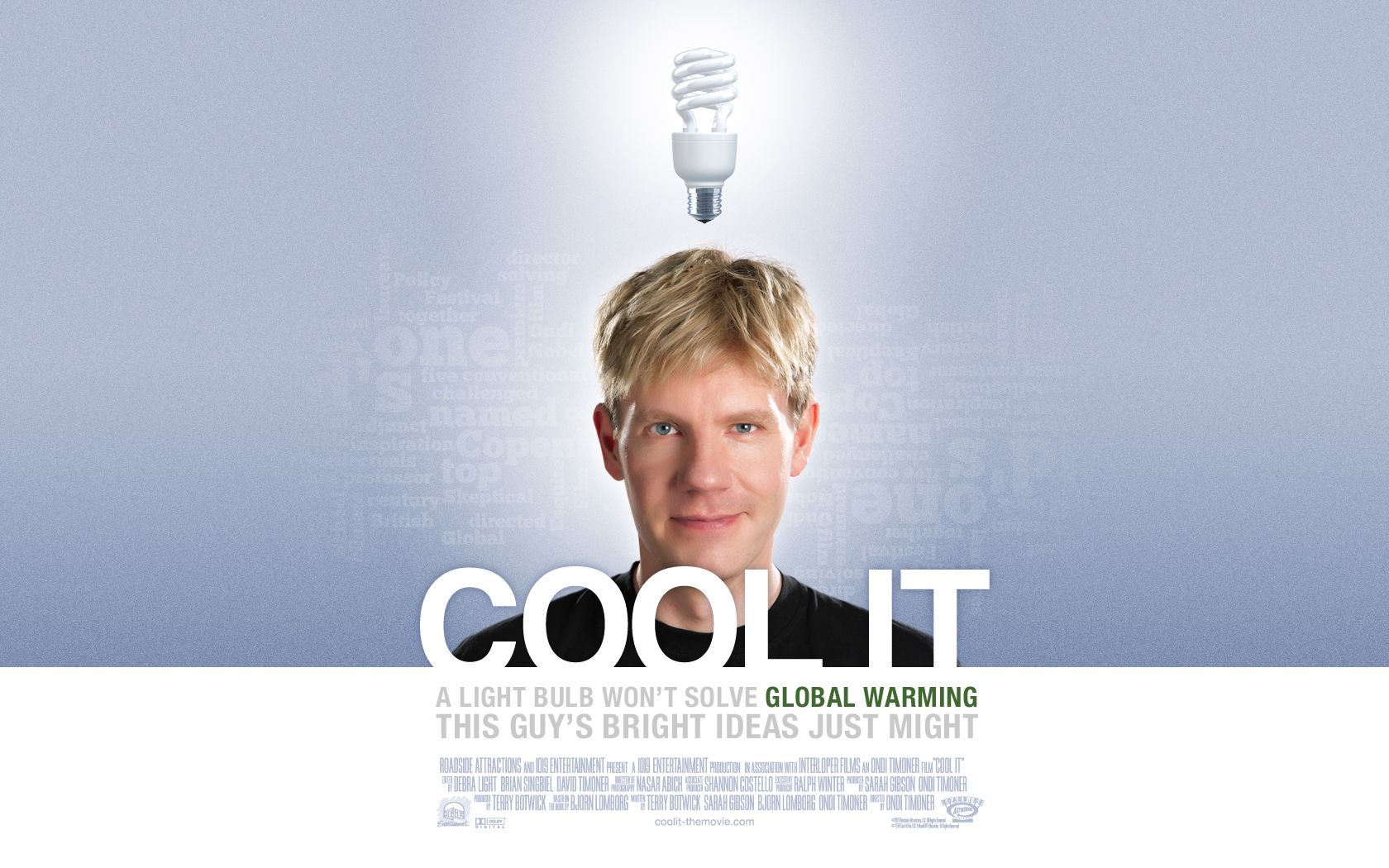
Cool It ©2010 Roadside Attractions, all rights reserved.
Fewer topics in contemporary science and technology policy have generated as much controversy or vociferous debate as global warming (more recently branded as climate change) and more importantly, how to mitigate its effects. Recent international treaties such as The Kyoto Protocol and conferences such as last December’s United Nations Climate Change Conference in Copenhagen have largely paid lip service towards actionable change and technology aimed at eradicating the precursors and causes of global warming. In the middle of this stalemate is an increasingly hostile rhetoric that has bifurcated into two divergent, unyielding camps—either you believe climate change and greenhouse emissions are a fraud, period, or you believe the problem is so imminently dire that surely, the end of the world is nigh. This dichotomy was no more apparent than during last year’s ”Climategate” controversy, in which hacked emails leaked from the University of East Anglia’s Climatic Research Unit in England were interpreted, depending on which report you read, as scientific fraud and tampering or reinforcement for climate science. Perhaps it is time, as the eponymous title of our latest Editor’s Choice suggests, for us all to Cool It. An environmental film about 21st Century problems, and the modern solutions they necessitate, Cool It presents an unapologetic, practical approach towards global warming and the problems that eclipse it. It’s time we all listened. ScriptPhD.com continues our ongoing “It’s Not Easy Being Green” series with a review of this thought-provoking, conversation-starting film. After seeing a recent screening in Los Angeles, we are proud to give Cool It our blog’s rare highest honor—Editor’s Choice. Join the conversation now under the “continue reading” cut.
Comic-Con 2010: Day 3
Jul4

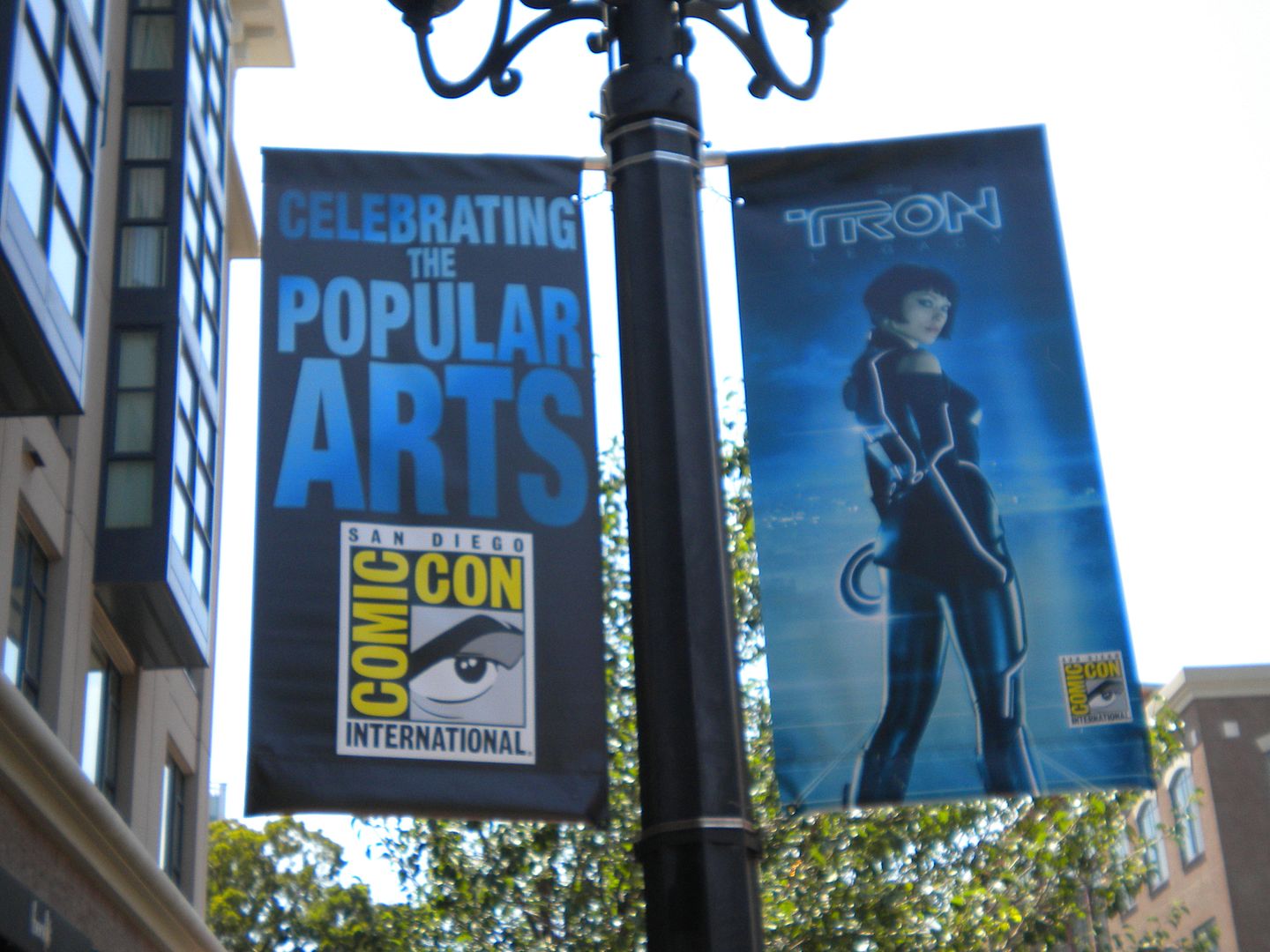
Street signs adorning the City of San Diego for Comic-Con 2010
Day 3 was Star Wars Day at San Diego Comic-Con International and we have something shocking to report, ladies and gentlemen. We did not see a single light saber, not one! Since we almost incurred an unfortunate eye injury last year due to an overenthusiastic Jedi, this was most welcome relief. For ScriptPhD.com, today was all about science and technology. In a day that could not have been more tailor-made for our website, we enjoyed panels with the eminent sci-fi television writers of today discussing writing for genre TV (a must-read for any aspiring TV writers out there!), a visit from the greatest science fiction writer in the history of science fiction, Ray Bradbury, a preview of next season’s sci-fi show The Event, and a panel on how exactly shows like CSI “tech” out with gadgets galore. Oh, yes, did we mention we got to hang out privately with the MythBusters?? With the help of our intrepid reporter Bryy Miller, we bring you the most complete Comic-Con coverage on the web. Plus, our Costume of the Day, after the “continue reading” cut!
REVIEW: "Splice" (includes VIDEO interview with cast + crew)
Jun1

Splice ©2010 Warner Brothers Entertainment, all rights reserved.
About a week and a half ago, scientists achieved a remarkable evolutionary stepping stone in the technological holy grail of eventually engineering synthetic life. Nicknamed ‘Synthia’ by her experimental progenitors, the latest discovery is a viable, self-propagating yeast cell hosting a bacterial Mycoplasma mycoides genome (consisting of non-biological DNA) purely composed in the laboratory. In eerily apt timing, Splice, a new science fiction thriller premiering this week, explores the scientific ramifications and bioethical morass encompassing the creation of a human-animal hybrid by a rogue superstar genetics couple. Under the “continue reading” cut, ScriptPhD.com’s review of Splice, discussion of the expanding frontiers of genetic engineering, and a special video interview with the director/writer, producer and stars of the film.
Retrospective: ScriptPhD.com Celebrates One Year!
May2

Our official ScriptPhD anniversary cake! We wish we could have saved a slice for all our fans!
One year ago, on today’s date, a new blog named ScriptPhD.com was launched—the first of its kind. What started out as a simple idea, to write about science and technology in entertainment, has evolved and grown beyond our wildest expectations. We have met astronauts. We have hung out with the MythBusters. We have interviewed movie stars and writers. We have engaged scientists, engineers, and doctors into thinking about and discussing science in a completely new perspective. But most importantly, we have expanded our coverage to include media, advertising, and relevant pop culture topics to fully encapsulate the portrayal of science in the messages we collectively absorb. For those that have been faithfully on board since day one and for our newest fans, we wish to extend warm gratitude for the support and encouragement and a retrospective of our best work from the past year. We also share some exciting, ambitious plans for the year ahead, all under the “continue reading” cut!
ScriptPhD Roundtable: Naturally Obsessed—The Making of a Scientist
Apr0

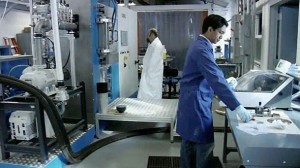
Graduate student Rob Townley mixes solution in a beaker in a scene from documentary "Naturally Obsessed: The Making of a Scientist." Film images ©ParnassusWorks Films, all rights reserved.
Society’s unequivocal fascination with science and scientists, reflected by a growing presence as staples of film, television, and popular culture, has only been magnified by the enigmatic (and seemingly impenetrable) aura in which they are enveloped. Their studies decidedly abstruse, their coded language unintelligible, their habits quirky and eccentric, the world of the scientist has been an audiovisual shroud of mystery—until now. In perhaps the most authentic, unfiltered, extemporaneous portrayal of scientists in their environment ever recorded, new documentary Naturally Obsessed: The Making of a Scientist welcomes the lay audience into the laboratory as silent observers. No reservations, no restrictions, no preconceptions. The result is an emotionally stunning masterpiece that connects us to scientists as people, reaches out across professional divides, and places PhD students, the backbone of the modern scientific laboratory, under the microscope for the first time. ScriptPhD.com recently screened the movie with a group of UCLA PhD biology students. Under the “continue reading” cut is our review, along with an honest roundtable discussion that included reaction to the movie, its parallel to their lives, and the training of modern scientists.
Selling Science Smartly: Dow Human Element Campaign
Feb3

When it comes to the interface of art and science, in many ways Madison Avenue finds itself in the position of the early days of sci-fi entertainment, where campy, unrefined productions took decades to evolve into the sophisticated films and shows we enjoy today. To be brutally honest, 95% of current science and technology advertising ranges from hackneyed to terrible; unimaginative, uncreative, uninspired. But here at ScriptPhD.com, we want to focus on the superlative 5%. What makes these campaigns work, what elevates their content above the crowd and most importantly, how do they fit within the theme of the science or industry they are promoting? This is why we are expanding our umbrella of coverage—which has heretofore included film, television and media—to the final frontier: advertising. In our brand new series entitled “Selling Science Smartly,” we will profile the best that science and technology advertising (print, TV, radio, digital and everything in-between) has to offer. Where possible, we will interview the respective campaign’s agencies and creative teams to give you a rarely revealed behind-the-scenes purview into the process and foundation of making these ads. We are proud to launch the series with the exceptional Dow Human Element campaign, including an in-depth interview with Creative Director and mastermind John Claxton of Draftfcb Chicago. For the full article, please click “continue reading.”
Love is a Many-Splendored Algorithm
Feb3

You spot someone across a crowded room. There is eye contact. Your heart beats a little faster, palms are sweaty, you’re light-headed, and your suddenly-squeamish stomach has dropped to your knees. You’re either suffering from an onset of food poisoning or you’re in love. But what does that mean, scientifically, to fall in love, to be in love, to stay in love? In our special Valentine’s Day post, Editor Jovana Grbić expounds on the neuronal and biophysical markers of love, how psychologists and mathematicians have harnessed (and sometimes manipulated) this information to foster 21st Century digital-style romance, and concludes with a personal reflection on what love really means in the face of all of this science. You might just be surprised. So, Cupid, draw back your sword… and click “continue reading” for more!