Podcast: Designing California Science Center’s ‘Ecosystems’ Exhibit
May2

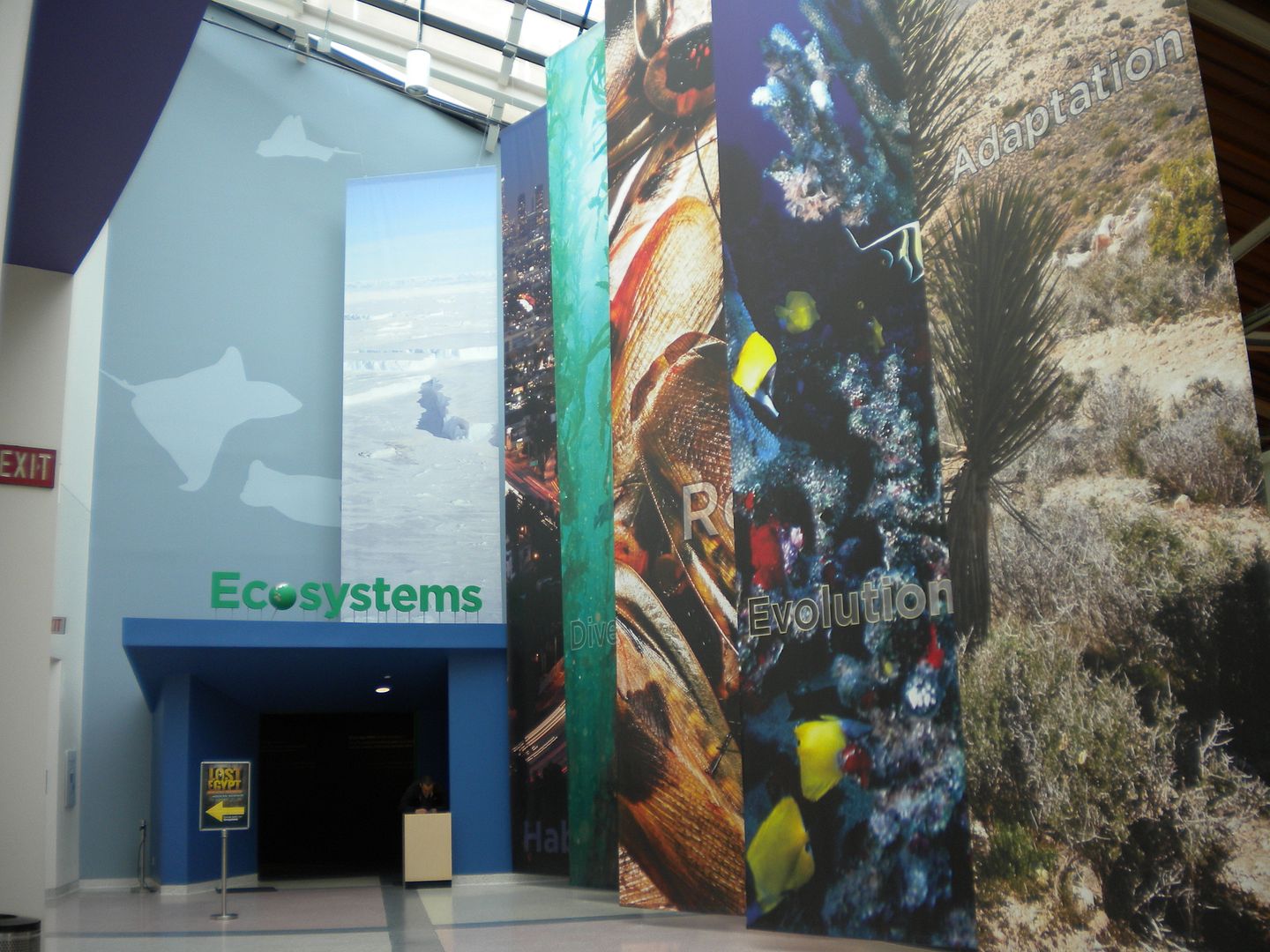
The free 'Ecosystems' exhibit at the California Science Center. Photography ©2011 ScriptPhD.com, all rights reserved.
Approximately a year ago, the California Science Center added a 45,000 square foot permanent exhibit called ‘Ecosystems,’ nearly doubling the size of the museum. Ten years in the making, at a cost of $165 million, ‘Ecosystems’ manages to impress visually and scholastically. ScriptPhD.com recently got a private tour and in-depth guide of the ambitious exhibit and didactic tool. Afterwards, we had the opportunity to sit down with the man that conceptualized ‘Ecosystems’ and curator of ecology at the California Science Center — Dr. Chuck Kopczak. An avid geologist, and devoted to the promulgation of quality science education, Dr. Chuck graciously sat down with us for an in-depth conversation about ‘Ecosystems,’ the future of science education, and energizing environmental causes through science. Our full tour and podcast, under the “continue reading” cut.
From The Lab: Google World Science Fair and a New Generation of Idea-Makers
Apr0

The Google Science Fair: the first-ever global internet science competition is sure to have a tremendous impact on science education and innovation.
In his State of the Union speech in January, US President Barack Obama proclaimed that “we need to teach our kids that it’s not just the winner of the Super Bowl who deserves to be celebrated, but the winner of the science fair.” A noble (and correct) assessment, to be sure, but one mired in numerous educational and cultural obstacles. For one thing, science fairs themselves are at a perilous crossroads. A New York Times report issued in February stated that not only is participation in science fairs among high school kids falling, but that the kind of creativity and independent exploration that these competitions necessitate is impossible under current rigid test-driven educational guidelines for teaching mathematics and science. Indeed, an interesting recent Newsweek article on “The Creativity Crisis” conveyed research studies showing that for the first time, American creativity is declining. How appropriate, then, that this April (national math education month) brings the culmination of the Google World Science Fair, the first ever competition of its kind transpiring online and open to lab rats from all over the globe. ScriptPhD.com discusses why this could be a game-changer for the next generation of young scientists, under the “continue reading” cut.
EDITOR’S CHOICE: It’s Not Easy Being Green: Cool It!
Nov1

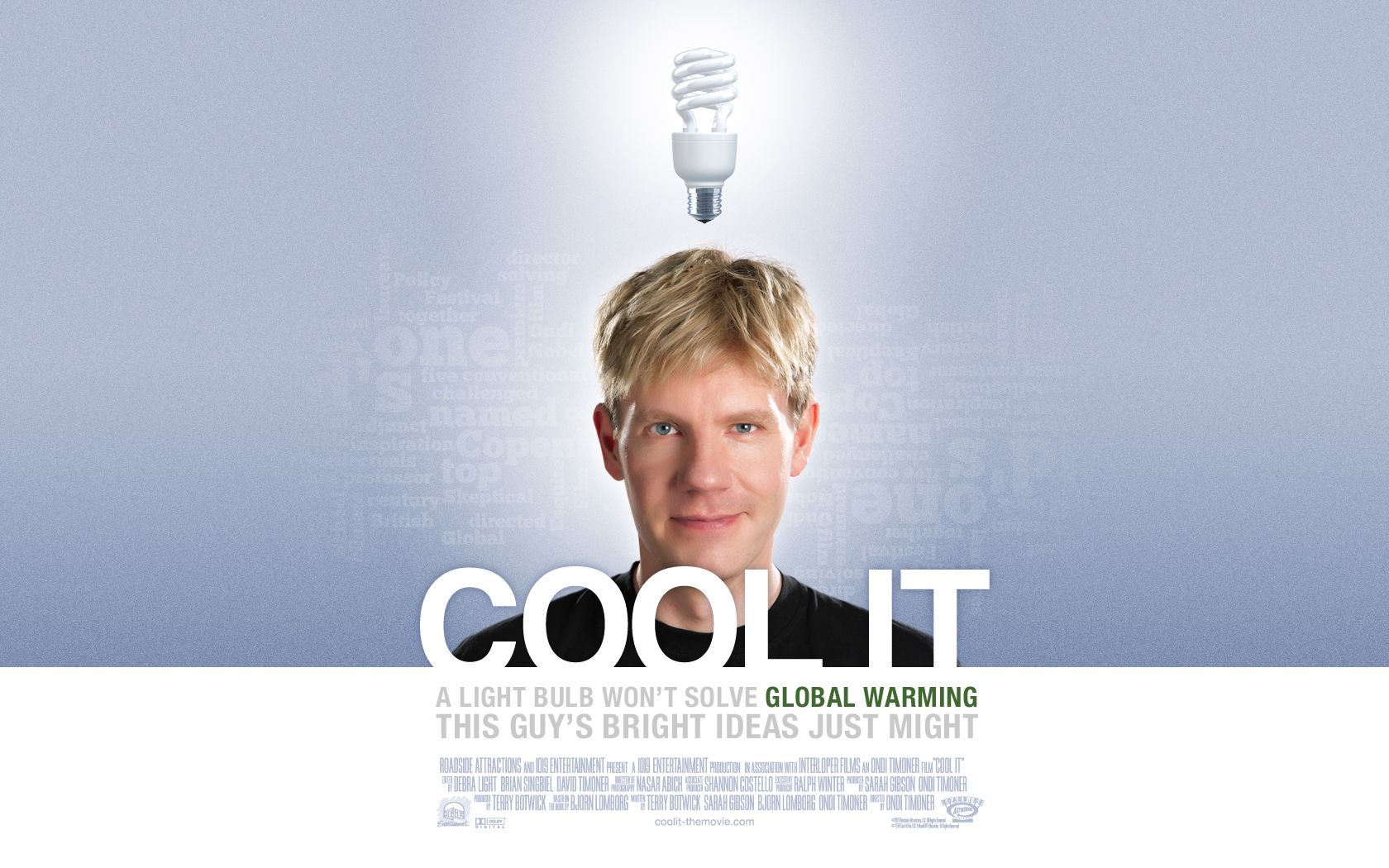
Cool It ©2010 Roadside Attractions, all rights reserved.
Fewer topics in contemporary science and technology policy have generated as much controversy or vociferous debate as global warming (more recently branded as climate change) and more importantly, how to mitigate its effects. Recent international treaties such as The Kyoto Protocol and conferences such as last December’s United Nations Climate Change Conference in Copenhagen have largely paid lip service towards actionable change and technology aimed at eradicating the precursors and causes of global warming. In the middle of this stalemate is an increasingly hostile rhetoric that has bifurcated into two divergent, unyielding camps—either you believe climate change and greenhouse emissions are a fraud, period, or you believe the problem is so imminently dire that surely, the end of the world is nigh. This dichotomy was no more apparent than during last year’s ”Climategate” controversy, in which hacked emails leaked from the University of East Anglia’s Climatic Research Unit in England were interpreted, depending on which report you read, as scientific fraud and tampering or reinforcement for climate science. Perhaps it is time, as the eponymous title of our latest Editor’s Choice suggests, for us all to Cool It. An environmental film about 21st Century problems, and the modern solutions they necessitate, Cool It presents an unapologetic, practical approach towards global warming and the problems that eclipse it. It’s time we all listened. ScriptPhD.com continues our ongoing “It’s Not Easy Being Green” series with a review of this thought-provoking, conversation-starting film. After seeing a recent screening in Los Angeles, we are proud to give Cool It our blog’s rare highest honor—Editor’s Choice. Join the conversation now under the “continue reading” cut.
It’s Not Easy Being Green: Powering The Future (Podcast)
Jul0

Wind turbines collecting energy that will eventually be converted into electricity and other fuel sources. This technology is widely discussed in the new Discovery Channel special "Powering The Future." Image courtesy of Discovery Channel.
Nothing has done more to reinvigorate discussions about energy and fuel dependence than the tragic oil spill currently afflicting the Gulf Coast [excellent resource for trajectory, timeline and news sources]. Though scientists and oil manufacturers continue to debate the validity of the “Peak Oil” theory, a very uncomfortable reality looms that oil production may not be able to keep up with thirsty demand. With an ever-increasing global population, a constant proliferation of technology choices and lifestyle improvements, and a rising middle class in third world countries, the factors contributing to fuel consumption may be the precipice of an eventual geopolitical crisis. In an effort to showcase their dedication to addressing the most salient energy and environmental questions affecting our generation, the Discovery Channel, backed by founder John Hendricks, is launching a revolutionary four-part documentary called Powering The Future. In it, they address a range of economics, national security, social and scientific questions related to energy and fuel all through the single focal point of searching for a modern, clean, limitless supply of energy. Our coverage of Powering the Future includes a review of the first installment and an exclusive podcast interview with the show’s host, lead scientist for the Nature Conservancy, Dr. M. Sanjayan. For full content, please click “continue reading.”
World Science Festival: Day 4 + Video
Jun0

The 2010 World Science Festival Runs in New York City from June 2-6.
We have truly saved the best for last! ScriptPhD.com’s coverage of the 2010 World Science Festival in New York City concludes with panels ranging from the secrets hidden in our underwater oceanic wonderland (especially apt as we clean the worst oil spill in history), a panel on the hidden dimensions of our visual world, and a behavioral panel that sheds light into how animals and humans process thought. In addition, we provide a short video of star-gazing New Yorkers who came out to see the James Webb telescope last week. Our correspondents were the amazing New York City science writers Jessica Stuart and Emily Elert. Synopses and pictures of three extraordinary panels with the premier scientists of our time under the “continue reading” cut.
World Science Festival: Day 3
Jun0

The 2010 World Science Festival Runs in New York City from June 2-6.
ScriptPhD.com’s coverage of the World Science Festival in New York City continues towards the physics and mathematics realm. Day 3 events on Friday included an intimate discussion about astrophysics and the new James Webb Telescope, set to replace Hubble in June of 2014, a panel about hearing and visualizing gravity with Albert Einstein’s modern successors, and a panel about the very limits of our understanding of science—the line between what we do and don’t (or can’t) know—and its bridge to culture and art. Contributions to our coverage were done by New York City science writers Jessica Stuart and Emily Elert. Synopses and pictures of three extraordinary panels with the premier scientists of our time under the “continue reading” cut.
World Science Festival: Opening Gala + Day 2
Jun0

The 2010 World Science Festival Runs in New York City from June 2-6.
Begun in 2008 by Columbia University Physicist Brian Greene, the World Science Festival has burgeoned from an intimate cluster of science panels to a truly integrated mega-event melding culture, science, and the arts. Those lucky enough to make it out to New York City to the over 40 events this year will have a chance to learn about a variety of current science topics, go stargazing with NASA Scientists, discuss Faith and Science, and find out why humans commit violent crimes. Those not lucky enough to be there can browse the full list of events here and watch a live-stream of selected events here. ScriptPhD.com is proud to be at the festival, and will be bringing you coverage through Sunday through the eyes of talented science writers Jessica Stuart and Emily Elert. Our blogging will include event summaries, photographs, interviews and even videos of the street fairs and science literally spilling over into the streets of New York.
Earth Week REVIEW: DisneyNature's Oceans
Apr0

Oceans film poster and associated images ©DisneyNature Films, all rights reserved.
Happy Earth Week 2010, everyone! Here at ScriptPhD.com, we have devoted a number of articles to environment, sustainability and eco-awareness as part of our continuing “It’s Not Easy Being Green” series. This year, in celebration of the 40th anniversary of Earth Day, we are devoting the entire week to articles, interviews and profiles of companies, individuals and content that raises awareness of sustainability efforts and new ideas for the green science revolution. Because water lies at the heart of most modern environmental crises, we kick off Earth Week with CaptainPlanet’s review of the stellar new DisneyNature documentary Oceans, a truly spectacular oeuvre that celebrates the majesty of our most important and delicate resource. We also include a number of practical, easy things you can do right now to make a difference globally by acting locally. For our Oceans review and to find out what you can do to help protect our Earth’s water supply, please click the “continue reading” cut.
It's Not Easy Being Green: 'Tapped' Out on Bottled Water (World Water Day)
Mar6

“Whiskey is for sipping, but water’s for fighting.” —Mark Twain
Today, March 22, 2010, is World Water Day, an initiative formed at the 1992 United Nations Conference on Environment and Development. As we head into Earth Day next month, no environmental issue carries more sociopolitical, economic and health ramifications than a clean and abundant supply of water. Some of the highest global morbidity and mortality rates are directly related to lack of access to clean water—both in contracting communicable diseases as well as agricultural impact that aggravates famine. At the heart of this discussion is a frenzied (and growing) thirst for bottled water; Americans alone bought more than 29 billion bottles in 2007. If you have long suspected that bottled water is not good for the environment, but only had a hazy notion about the specific consequences of the bottled water industry, Tapped, an Atlas Films documentary about to be released on DVD, will knock your socks off. The film expertly chronicles the insidious practices of bottled water companies and the dire consequences it has on our collective health, communities, environment, economy and policy in ways you never would have imagined. Our special World Water Day post under the “continue reading” cut.
Science and Society: A Policy Analysis
Mar0

“The fewer the facts, the stronger the opinion.” —Arnold H. Glasgow, American humorist
In today’s modern, fast-moving world, large telecommunication and media corporations are playing an ever increasing role in shaping the collective consciousness of society. This development might lead us to ponder what role, if any, traditional pillars of learning such as law, science, medicine, literature and art have to contribute to society. How does society absorb these contributions during the ongoing media (and social media) blitz that has transformed how we obtain, process and share information. More importantly, what influence do these contributions have upon society, and what influence does society reciprocate upon these institutions? For our last (and best) post of Science Week, ScriptPhD.com examines the relationship between science and society, and extrapolates social policy and pop culture lessons that could shape and transform that relationship in the future. Please click “continue reading” for more.