Editor’s Selection: Lab Coats in Hollywood: Science, Scientists and Cinema

21
Sep
0

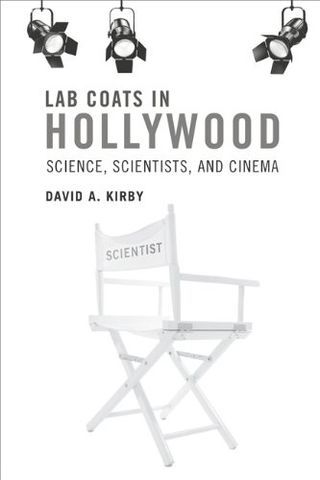
Lab Coats in Hollywood: Science, Scientists and Cinema book cover ©2011 MIT Press, all rights reserved

Read through any archive of science fiction movies, and you quickly realize that the merger of pop culture and science dates as far back as the dawn of cinema in the early 1920s. Even more surprising than the enduring prevalence of science in film is that the relationship between film directors, scribes and the science advisors that have influenced their works is equally as rich and timeless. Lab Coats in Hollywood: Science, Scientists, and Cinema (2011, MIT Press), one of the most in-depth books on the intersection of science and Hollywood to date, serves as the backdrop for recounting the history of science and technology in film, how it influenced real-world research and the scientists that contributed their ideas to improve the cinematic realism of science and scientists. For a full ScriptPhD.com review and in-depth extended discussion of science advising in the film industry, please click the “continue reading” cut.

Digg This
Reddit This
Stumble Now!
Buzz This
Vote on DZone
Share on Facebook
Bookmark this on Delicious
Kick It on DotNetKicks.com
Shout it
Share on LinkedIn
Bookmark this on Technorati
Post on Twitter
Google Buzz (aka. Google Reader)
Share

REVIEW: The Naked Lady Who Stood On Her Head

21
Dec
0

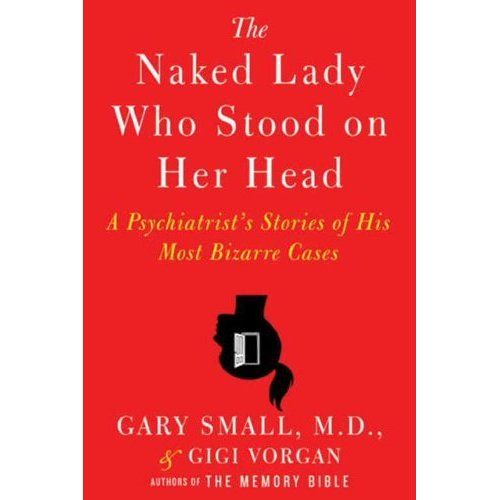
The Naked Lady Who Stood On Her Head ©2010 William Morrow Publishing, all rights reserved.

One of the most captivating books of 2010 was not a gory science-fiction thriller or a gripping end-of-the world page-turner, though its subject matter is equally engrossing and out of the ordinary. It is about somewhat crazy people doing crazy things as seen through the lenses of the man that has been treating them for decades. The Naked Lady Who Stood On Her Head is the first psych ward memoir, a tale of a curious doctor/scientist and his most extreme, bizarre, and sometimes touching cases from the nation’s most prestigious neurology centers and universities. Included in ScriptPhD.com’s review is a podcast interview with Dr. Small, as well as the opportunity to win a free autographed copy of his book. Our end-of-the year science library pick is under the “continue reading” cut.

Digg This
Reddit This
Stumble Now!
Buzz This
Vote on DZone
Share on Facebook
Bookmark this on Delicious
Kick It on DotNetKicks.com
Shout it
Share on LinkedIn
Bookmark this on Technorati
Post on Twitter
Google Buzz (aka. Google Reader)
Share

Comic-Con 2010: Day 4

27
Jul
1

As Comic-Con winds down on the shortened Day 4, we conclude our coverage with two panels that exemplify what Comic-Con is all about. As promised, we dissect the “Comics Design” panel of the world’s top logo designers deconstructing their work, coupled with images of their work. We also bring you an interesting panel of ethnographers, consisting of undergraduate and graduate student, studying the culture and the varying forces that shape Comic-Con. Seriously, they’re studying nerds! Finally, we are delighted to shine our ScriptPhD.com spotlight on new sci-fi author Charles Yu, who presented his new novel at his first (of what we are sure are many) Comic-Con appearance. We sat down and chatted with Charles, and are pleased to publish the interview. And of course, our Day 4 Costume of the Day. Comic-Con 2010 (through the eyes of ScriptPhD.com) ends under the “continue reading” cut!

Digg This
Reddit This
Stumble Now!
Buzz This
Vote on DZone
Share on Facebook
Bookmark this on Delicious
Kick It on DotNetKicks.com
Shout it
Share on LinkedIn
Bookmark this on Technorati
Post on Twitter
Google Buzz (aka. Google Reader)
Share

Guest Article: The Idea-Monger: No Genius Required by Mark Changizi (Podcast)

25
May
5

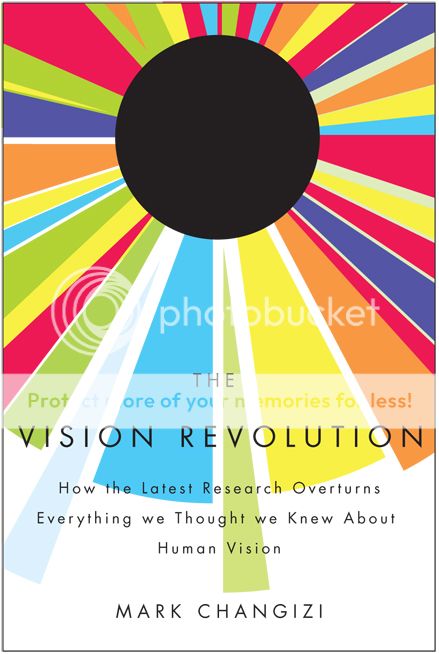
The Vision Revolution by Mark Changizi. ©2010 BenBella Books, all rights reserved

Dr. Mark Changizi, a cognitive science researcher, and professor at Rensselaer Polytechnic Institute, is one of the most exciting rising stars of science writing and the neurobiology of popular culture phenomena. His latest book, The Vision Revolution, expounds on the evolution and nuances of the human eye—a meticulously designed, highly precise technological marvel that allows us to have superhuman powers. You heard me right; superhuman! X-ray vision, color telepathy, spirit reading, and even seeing into the future. Dr. Changizi spoke about these ideas, and how they might be applied to everything from sports stars with great hand-eye coordination to modern reading and typeface design with us in ScriptPhD.com’s inaugural audio podcast. He also provides an exclusive teaser for his next book with a guest post on the surprising mindset that makes for creative people. Read Dr. Changizi’s guest post and listen to the podcast under the “continue reading” cut.

Digg This
Reddit This
Stumble Now!
Buzz This
Vote on DZone
Share on Facebook
Bookmark this on Delicious
Kick It on DotNetKicks.com
Shout it
Share on LinkedIn
Bookmark this on Technorati
Post on Twitter
Google Buzz (aka. Google Reader)
Share

'From Eternity to Here' with Physicist Sean Carroll

12
May
0

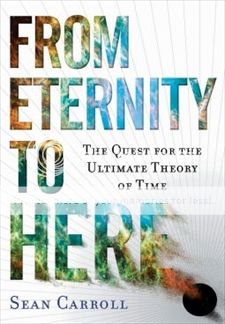
Physicist Sean Carroll's new book "From Eternity to Here." ©2010 Dutton Books, all rights reserved.

What is time? How does it work? Why is it immutably unidirectional (moving from the past and towards the future)? And most importantly, why does time exist at all? These are among the preeminent metaphysical questions to date for scientists and laypeople alike. Using the principles of entropy and universe expansion since the Big Bang, cosmologist Sean Carroll (recently profiled in the New York Times) hypothesizes about the arrow of time in a brilliant new book From Eternity to Here: The Quest for the Ultimate Theory of Time. In addition to reviewing the book, ScriptPhD.com’s in-house physics and astronomy guru, Stephen Compson, had an extraordinary opportunity to sit down with Dr. Carroll in his physics lab at Caltech University. In a stunningly in-depth, rich interview, they explored everything from the creation of our universe, to entropy, the time-space continuum, how physics and film intersect, and why the principles in Dr. Carroll’s book are important and topical for the general public to grasp. It’s rare to see this wide-ranging of a discussion on popular physics from such an authoritative researcher, so sit back, enjoy and click “continue reading” for more.

Digg This
Reddit This
Stumble Now!
Buzz This
Vote on DZone
Share on Facebook
Bookmark this on Delicious
Kick It on DotNetKicks.com
Shout it
Share on LinkedIn
Bookmark this on Technorati
Post on Twitter
Google Buzz (aka. Google Reader)
Share

PROFILE: Popular Science's Theo Gray

17
Mar
0

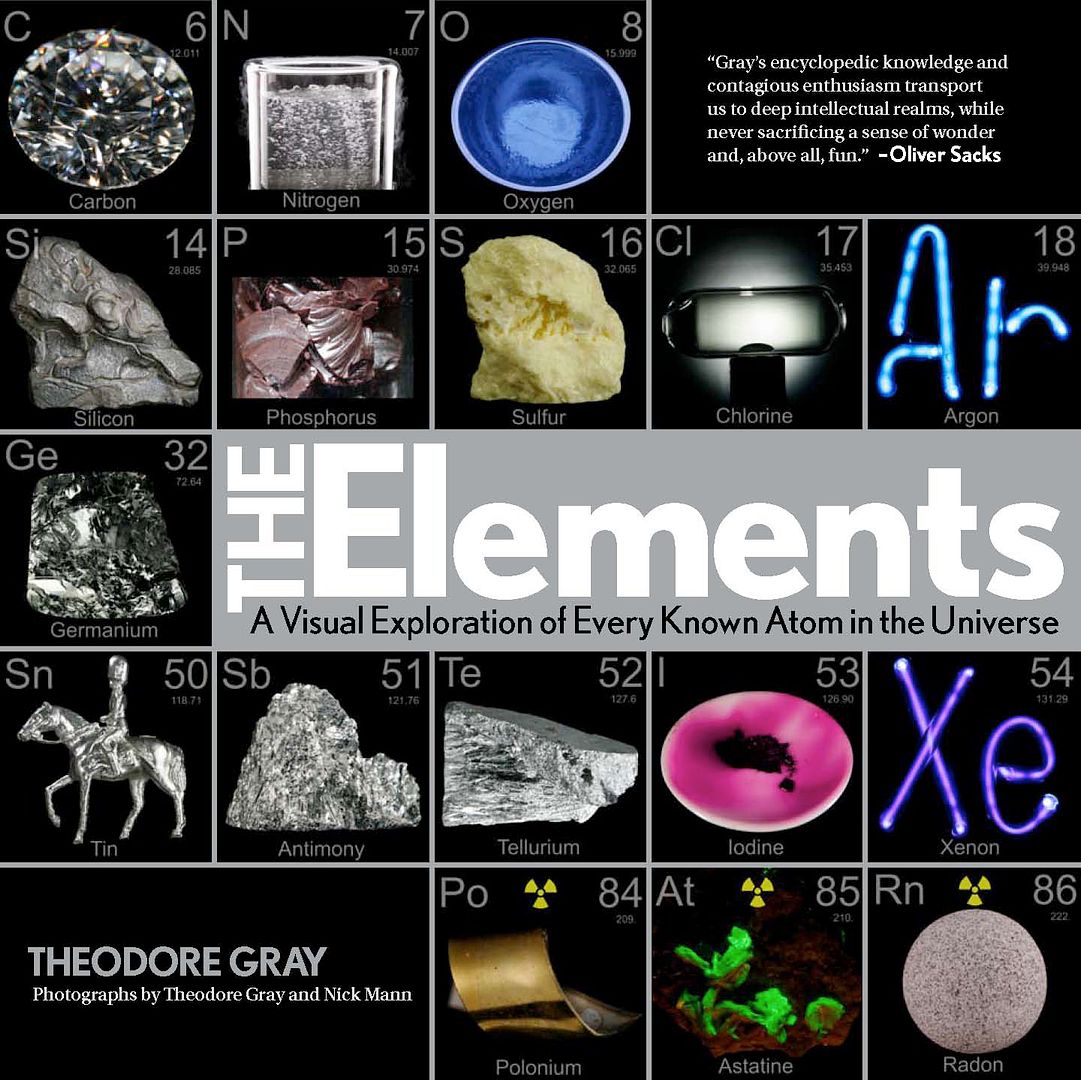
The Elements, a hardcover book of photography for every element in the periodic table. ©2009 Black Dog and Leventhal Publishing.

He is one of the most popular and explosive (sometimes literally!) science columnists of our day. Since 2005, he has written the Popular Science blog Gray Matter. He has been willing to try virtually any chemistry experiment known to man, all in the interest of proving a theory and educating (and entertaining) a fortunate lay audience. He has created the most widely acclaimed periodic table ever, which has been replicated into posters, an actual table, playing cards, and now, a gorgeous full-color hardcover book. Who is this mad scientist I am referring to? Why, Theodore Gray, of course! For Day 3 of Science Week, ScriptPhD.com is thrilled to review his new book The Elements, an equal parts homage to chemistry and photography. Editor Jovana Grbić sat down with Theo in a candid, in-depth interview about his books, his favorite elements, and the responsibility science writers have to informing the public. More more content, please click “continue reading.”

Digg This
Reddit This
Stumble Now!
Buzz This
Vote on DZone
Share on Facebook
Bookmark this on Delicious
Kick It on DotNetKicks.com
Shout it
Share on LinkedIn
Bookmark this on Technorati
Post on Twitter
Google Buzz (aka. Google Reader)
Share

Forever Young: Living in an Age of Agelessness

28
Jan
1

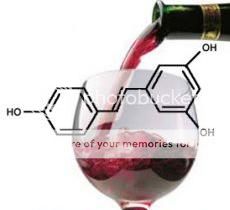
The chemical compound resveratrol, a component of red wine that has been linked to anti-aging properties in laboratory experiments.

During a recent trip to New York City, I had the pleasure of befriending exciting new author Ernesto Robles, whose debut novel The Malthusian Catastrophe is a ScriptPhD.com recommended pick. Smart, topical, fast-paced and decidedly engrossing, this biomedical thriller drives at the roots of our cultural obsession with the “fountain of youth” and the perilous socioeconomic repercussions of actually finding and disseminating it. In a year when the Nobel Prize for Medicine and Physiology went to a team of researchers for their discovery of how chromosomes are protected by telomeres and the enzyme telomerase, essential biological components of the human aging machinery, and a cultural era that has anointed juvenescence as sacrosanct, Malthusian’s overarching themes are especially germane. ScriptPhD.com’s discussion includes a review of the book, the biology and ethics of current aging research, and a one-on-one interview with Mr. Robles. For full content, please click “continue reading.”

Digg This
Reddit This
Stumble Now!
Buzz This
Vote on DZone
Share on Facebook
Bookmark this on Delicious
Kick It on DotNetKicks.com
Shout it
Share on LinkedIn
Bookmark this on Technorati
Post on Twitter
Google Buzz (aka. Google Reader)
Share

GUEST POST: On Chemistry, Movies and Making Science Entertaining

5
Jan
2
Reaction! Chemistry in the Movies is an Oxford University Press title. ©2009, all rights reserved.

Reaction! Chemistry in the Movies is an Oxford University Press title. ©2009, all rights reserved.

One of my favorite movies as a kid, and now, as a professional scientist, is Andromeda Strain. The heroes are mostly older, professorial types who work feverishly to understand an alien organism and save the planet. After being asked to review ReAction! Chemistry in the Movies for ScriptPhD.com, I was so curious to consume (with relish) the book’s guesswork about the chemistry found in Andromeda Strain. After returning to the beginning of the book and giving it a read, I was thrilled to find that ReAction! is a detailed, thoughtful exploration of the representation of chemistry in film. The book addresses, first and foremost, the fact that chemistry can play a lead role in film. The authors also discuss the dichotomy between the “dark” and “bright” sides of chemistry (and science) as illustrated by films in which chemistry or chemists play a central role. Also included are several playful explorations of the real science behind some famous examples of fictional chemistry in film. After the break is a full review of the book along with an in-depth interview with authors Mark Griep and Majorie Mikasen on the process of working together as chemist and artist, portrayal of chemists in film and how film can change public perception in science.

Digg This
Reddit This
Stumble Now!
Buzz This
Vote on DZone
Share on Facebook
Bookmark this on Delicious
Kick It on DotNetKicks.com
Shout it
Share on LinkedIn
Bookmark this on Technorati
Post on Twitter
Google Buzz (aka. Google Reader)
Share

REVIEW: The Road

24
Nov
0
The Road movie poster is ©2009 Dimension Films, all rights reserved

The Road movie poster is ©2009 Dimension Films, all rights reserved

Remember back in high school, when you’d skirt having to read the book by watching the movie instead, and your teacher would admonish you for not getting the most out of the experience? I never fully grasped what that meant until watching The Road, a new feature film adaptation of Cormac McCarthy’s Pulitzer Prize-winning survival epic. Though dedicated to realizing McCarthy’s scope of a ruined, uninhabitable planet and is a pleasant enough watch, the film ultimately can’t translate the book’s introspective vision and humanistic totality. Sometimes, it’s better sticking with the 1,000 words. Complete ScriptPhD.com review under the “continue reading” jump.

Digg This
Reddit This
Stumble Now!
Buzz This
Vote on DZone
Share on Facebook
Bookmark this on Delicious
Kick It on DotNetKicks.com
Shout it
Share on LinkedIn
Bookmark this on Technorati
Post on Twitter
Google Buzz (aka. Google Reader)
Share

INTERVIEW: Best-Selling Author and Medical Doctor Josh Bazell

3
Aug
0
Dr. Josh Bazell, author of medical mystery Beat the Reaper

Dr. Josh Bazell, author of medical mystery "Beat the Reaper"

ScriptPhD.com recently reviewed and recommended a new medical mystery thriller, “Beat the Reaper”, written by real-life medical doctor Josh Bazell. A longtime aspiring writer, Josh majored in English Literature with Honors at Brown University, after which he entered the English Lit PhD program at Duke. He ultimately chose to pursue a post-graduate degree in medicine at Columbia University, and completed his residency in the Department of Psychiatry at the University of California at San Francisco. He is currently working on his second book and is a practicing psychiatrist.

In between getting ready to release “Beat the Reaper” as a paperback, with a Leonardo di Caprio-starring film adaptation in the works, and writing his follow-up novel, a busy Dr. Bazell generously lent us some time to chat. To read our interview, please click “continue reading”.

Digg This
Reddit This
Stumble Now!
Buzz This
Vote on DZone
Share on Facebook
Bookmark this on Delicious
Kick It on DotNetKicks.com
Shout it
Share on LinkedIn
Bookmark this on Technorati
Post on Twitter
Google Buzz (aka. Google Reader)
Share

Bad Behavior has blocked 369 access attempts in the last 7 days.