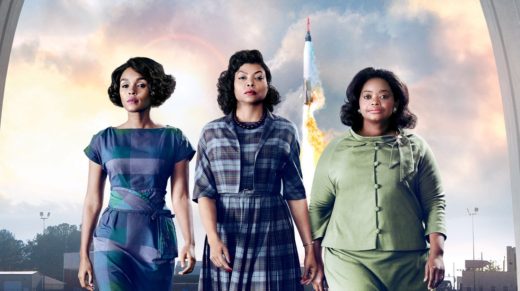
History abounds with examples of unsung science heroes, researchers and visionaries whose tireless efforts led to enormous breakthroughs and advances, often without credit or lasting widespread esteem. This is particularly true for women and minorities, who have historically been under-represented in STEM-related fields. English mathematician Ada Lovelace is broadly considered the first great tech and computing visionary — she pioneered computer programming language and helped construct what is considered the first computing machine (the Babbage Analytical Engine) in the mid-1800s. Physical chemist Dr. Rosalind Franklin performed essential X-ray crystallography work that ultimately revealed the double-helix shape of DNA (Photograph 51 is one of the most important images in the history of science). Her work was shown (without her permission) to rival King’s College biology duo Watson and Crick, who used the indispensable information to elucidate and publish the molecular structure of DNA, for which they would win a Nobel Prize. Dr. Percy Julian, a grandson of slaves and the first African-American chemist ever elected to the National Academy of Sciences, ingeniously pioneered the synthesis of hormones and other medicinal compounds from plants and soybeans. New movie Hidden Figures, based on the exhaustively researched book by Margot Lee Shetterley, tells the story of three such hitherto obscure heroes: Katherine Johnson, Dorothy Vaughn and Mary Jackson, standouts in a cohort of African-American mathematicians that helped NASA launch key missions during the tense 19060s Cold War “space race.” More importantly, Hidden Figures is a significant prototype for purpose-driven popular science communication — a narrative and vehicle for integrated multi-media platforms to encourage STEM diversity and scientific achievement. Continue reading How “Hidden Figures” Can Help Inspire a STEM Generation→
In 2011, a cognitive supercomputing system developed at IBM named “Watson” was pitted against, and subsequently defeated, two of the most successful Jeopardy! game-show contestants of all time. A project five years in the making, Watson was initially developed as a “Grand Challenge” successor to Deep Blue, the machine that beat Gary Kasparov at chess, and was a prototype for DeepQA, a question/answer natural language analysis architecture. Since his Jeopardy! triumph, however, Watson has been successfully applied towards improving health care, oncology, business applications and soon enough… even education. At the same time that IBM has been expanding Watson’s cognitive computing abilities, they’ve also been brilliantly marketing him to the general public through a series of traditional and interactive ads.
A spiral galaxy in the Dorado constellation created by a black hole. Technology from the film Interstellar is helping scientists gain greater understanding of this phenomenon. (credit: Roberto Colombari/Stocktrek Images/Corbis)
From its earliest inceptions, science fiction has blurred the line between reality and technological fantasy in a remarkably prescient manner. Many of the discoveries and gadgets that have integrated seamlessly into modern life were first preconceived theoretically. More recently, the technologies behind ultra-realistic visual and motion capture effects are simultaneously helping scientists as research tools on a granular level in real time. The dazzling visual effects within the time-jumping space film Interstellar included creating original code for a physics-based ultra-realistic depiction of what it would be like to orbit around and through a black hole. Astrophysics researchers soon utilized the film’s code to visualize black hole surfaces and their effects on nearby objects. Virtual reality, whose initial development was largely rooted in imbuing realism into the gaming and video industries, has advanced towards multi-purpose applications in film, technology and science. The Science Channel is augmenting traditional programming with a ‘virtual experience’ to simulate the challenges and scenarios of an astronaut’s journey into space; VR-equipped GoPro cameras are documenting remote research environments to foster scientific collaboration and share knowledge; it’s even being implemented in health care for improving training, diagnosis and treatment concepts. The ability to record high-definition film of landscapes and isolated areas with drones, which will have an enormous impact on cinematography, carries with it the simultaneous capacity to aid scientists and health workers with disaster relief, wildlife conservation and remote geomapping.
The evolution of entertainment industry technology is sophisticated, computationally powerful and increasingly cross-functional. A cohort of interdisciplinary researchers at Northwestern University is adapting computing and screen resolution developed at DreamWorks Animation Studios as a vehicle for data visualization, innovation and producing more rapid and efficient results. Their efforts, detailed below, and a collective trend towards integration of visual design in interpreting complex research, portends a collaborative future between science and entertainment. Continue reading How Animation Technology Is Helping Scientists Visualize Data→
Front entrance of LA-based Lab Launch scientific incubator hub.
The current scientific landscape can best be thought of as a transitional one. With the proliferation of scientific innovation and the role that technology plays in our lives, along with the demand for more of these breakthroughs, comes the simultaneous challenge of balancing affordable lab space, funding and opportunity for young investigators and inventors to shape their companies and test novel projects. Los Angeles science incubator Lab Launch is trying to simplify the process through a revolutionary, not-for-profit approach that serves as a proof of concept for an eventual interconnected network of “discovery hubs”. Founder Llewelyn Cox sits down with ScriptPhD for an insightful podcast that assesses the current scientific climate, the backdrop that catalyzed Lab Launch, and why alternatives to traditional avenues of research are critical for fueling the 21st Century economy. Continue reading Podcast: Disrupting Incubator Innovation With “Lab Launch”→
Television writer, producer, activist and practicing pediatrician Neal Baer, MD.
It has become compulsory for modern medical (or scientifically-relevant) shows to rely on a team of advisors and experts for maximal technical accuracy and verisimilitude on screen. Many of these shows have become so culturally embedded that they’ve changed people’s perceptions and influenced policy. Even the Gates Foundation has partnered with popular television shows to embed important storyline messages pertinent to public health, HIV prevention and infectious diseases. But this was not always the case. When Neal Baer joined ER as a young writer and simultaneous medical student, he became the first technical expert to be subsumed as an official part of a production team. His subsequent canon of work has reshaped the integration of socially relevant issues in television content, but has also ushered in an age of public health awareness in Hollywood, and outreach beyond it. Dr. Baer sat down with ScriptPhD to discuss how lessons from ER have fueled his public health efforts as a professor and founder of UCLA’s Global Media Center For Social Impact, including storytelling through public health metrics and leveraging digital technology for propelling action. Continue reading Profile: ‘ER’ Writer/Medical Advisor Channels Storytelling Towards Social Activism→
Space exploration is enjoying its greatest popularity revival since the Cold War, both in entertainment and the realm of human imagination. Thanks in large part to blockbusters like Gravity, The Martian and Interstellar, not to mention privatized innovation from companies like SpaceX, and fascination with inter-galactic colonization has never been more trenchant. Despite the brimming enthusiasm, there hasn’t been a film or TV series that has tackled the subject matter in a nuanced way. Until now. The Expanse, ambitiously and faithfully adapted by SyFy Channel from the best-selling sci-fi book series, is the best space epic series since Battlestar Galactica. It embraces similar complex, grandiose and ethically woven storylines of human survival and morality amidst inevitable technological advancement. Below, a full ScriptPhD review and in-depth podcast with The Expanse showrunner Naren Shankar. Continue reading Podcast: “The Expanse” of Sci-Fi Colonization→
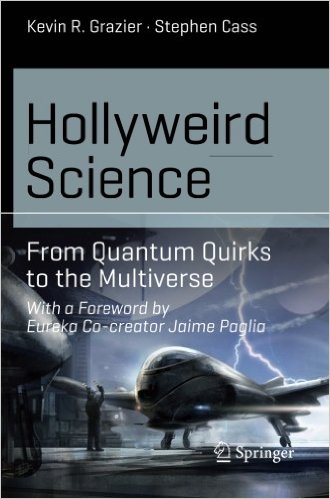
Dr. Kevin Grazier has made a career of studying intergalactic planetary formation, and, over the last few years, helping Hollywood writers integrate physics smartly into storylines for popular TV shows like Battlestar Galactica, Eureka, Defiance and the blockbuster film Gravity. His latest book, Hollyweird Science: From Quantum Quirks to the Multiverse traverses delightfully through the science-entertainment duality as it first breaks down the portrayal of science in movies and television, grounding the audience in screenplay lexicon, then elucidates a panoply of physics and astronomy principles through the lens of storylines, superpowers and sci-fi magic. With the help of notable science journalist Stephen Cass, Hollyweird Science is accessible to the layperson sci-fi fan wishing to learn more about science, a professional scientist wanting to apply their knowledge to higher-order examples from TV and film or Hollywood writers and producers of future science-based materials. From case studies, to in-depth interviews to breaking down the Universe and its phenomena one superhero and far-away galaxy at a time, this first volume of an eventual trilogy is the essential foundation towards understanding how science is integrated into a story and ensuring that future TV shows and movies do so more accurately than ever before. Full ScriptPhD review and podcast with author and science advisor Dr. Grazier below. Continue reading Podcast: “Hollyweird Science” and the Quantum Quirks of Entertainment→
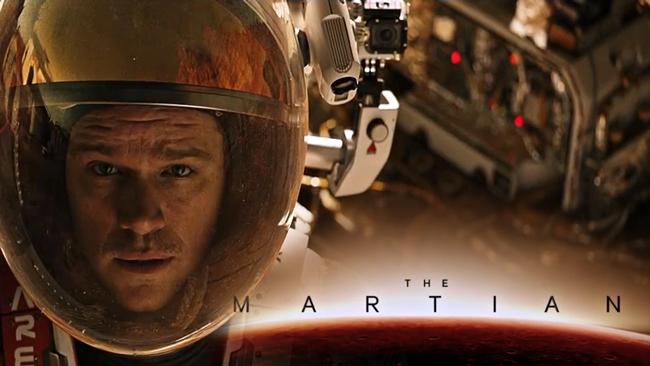
The Martian, is a film adaptation of the inventive, groundbreaking hard sci-fi adventure tale. Like Robinson Crusoe on Mars, it’s a triumph of engineering and basic science, a love letter to innovation and the greatest feats humans are capable of through collaboration. Directed by sci-fi legend Ridley Scott, and following in the footsteps of space epics Gravity and Interstellar, The Martian offers a stunning virtual imagination of Mars, glimpses of NASA’s new frontier – astronauts on Mars – and the stakes of a mission that will soon become a reality. Below, ScriptPhD.com reviews The Martian (an Editor’s Selection) and, with the help of a planetary researcher at The California Science Center, we break down some basics about Mars missions and the planetary science depicted in the film (interactive video). Continue reading Editor’s Selection: “The Martian” is a Transcendent Sci-Fi Opus→
The last 25 years have brought an unprecedented level of scientific and technological advances, impacting virtually all dimensions of society, from communication and the digital revolution, to economics and food production to nanotechnology and medicine – and that’s just a start. The next few decades will rapidly expand this progress with exponential discovery and innovation, amidst more pressing global challenges than we’ve ever faced before. The opportunities to develop faster, better and cheaper products that improve modern living are limitless – Tesla electric cars, energy-saving fuels and machines, robotics – but they all share a common basic need for developing and studying materials in a more efficient manner. This will require a real-time acceleration of sharing, analytics and simulation through readily accessible databases. Essentially, an open-source wiki for materials scientists. In our in-depth article below, ScriptPhD.com explains why materials science is the most critical gateway towards 21st Century technology and how California startup company Citrine Informatics is providing revolutionary new information extraction software to create a crowdsourced, open access database available to any scientist. Continue reading Citrine Informatics: Jump-Starting the Materials Science Revolution→
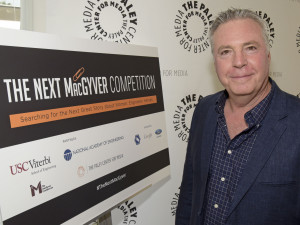
Engineering has an unfortunate image problem. With a seemingly endless array of socioeconomic, technological and large-scale problems to address, and with STEM fields set to comprise the most lucrative 21st Century careers, studying engineering should be a no-brainer. Unfortunately, attracting a wide array of students — or even appreciating engineers as cool — remains difficult, most noticeably among women. When Google Research found out that the #2 reason girls avoid studying STEM fields is perception and stereotypes on screen, they decided to work with Hollywood to change that. Recently, they partnered with the National Academy of Sciences and USC’s prestigious Viterbi School of Engineering to proactively seek out ideas for creating a television program that would showcase a female engineering hero to inspire a new generation of female engineers. The project, entitled “The Next MacGyver,” came to fruition last week in Los Angeles at a star-studded event. ScriptPhD.com was extremely fortunate to receive an invite and have the opportunity to interact with the leaders, scientists and Hollywood representatives that collaborated to make it all possible. Read our full comprehensive coverage below. Continue reading Searching For The Next “MacGyver” (On TV And On Campus)→