Podcast: Designing California Science Center’s ‘Ecosystems’ Exhibit

18
May
2

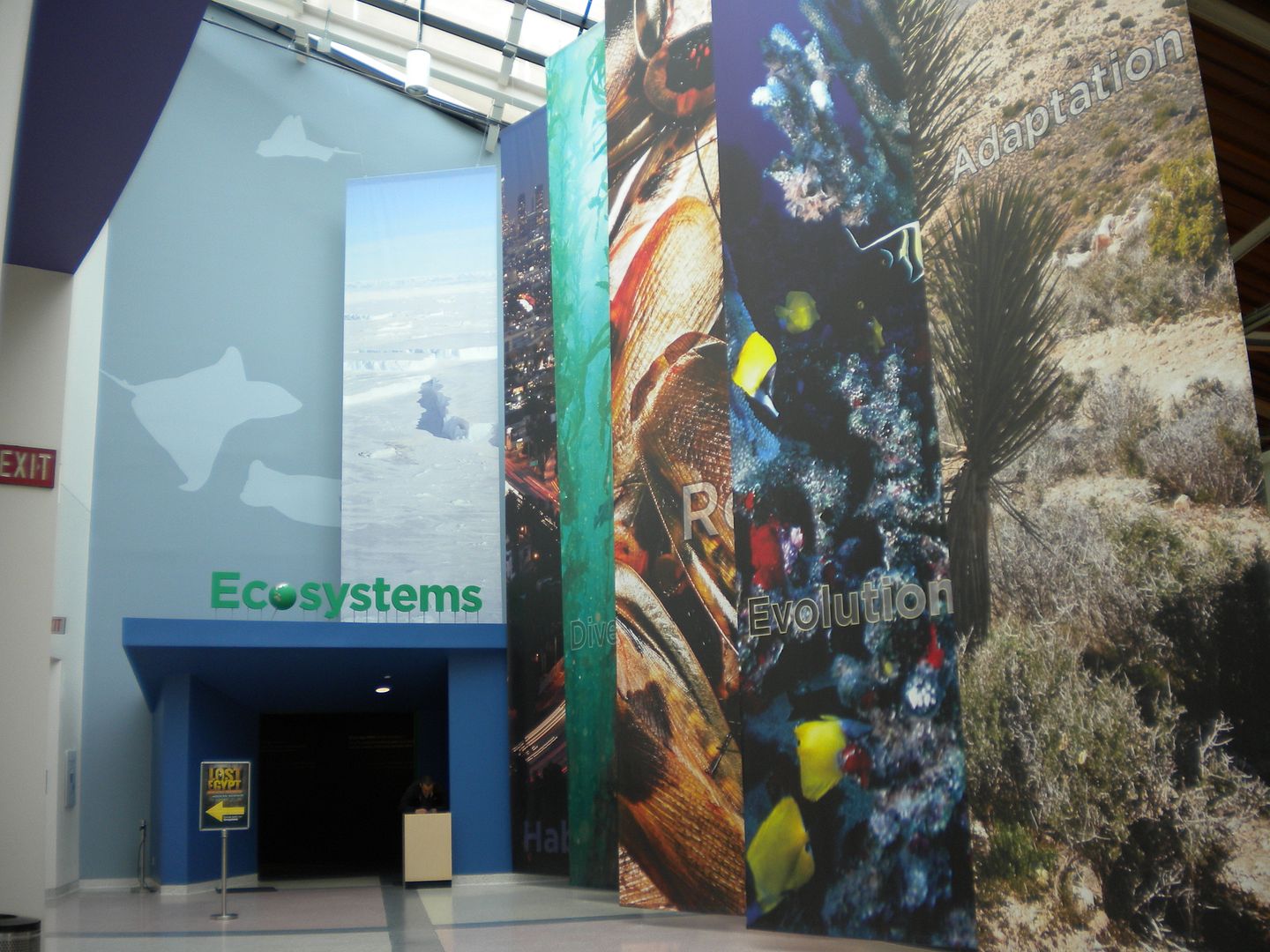
The free 'Ecosystems' exhibit at the California Science Center. Photography ©2011 ScriptPhD.com, all rights reserved.

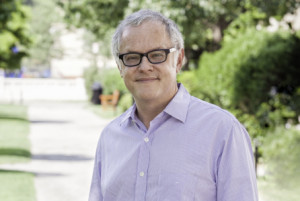
Approximately a year ago, the California Science Center added a 45,000 square foot permanent exhibit called ‘Ecosystems,’ nearly doubling the size of the museum. Ten years in the making, at a cost of $165 million, ‘Ecosystems’ manages to impress visually and scholastically. ScriptPhD.com recently got a private tour and in-depth guide of the ambitious exhibit and didactic tool. Afterwards, we had the opportunity to sit down with the man that conceptualized ‘Ecosystems’ and curator of ecology at the California Science Center — Dr. Chuck Kopczak. An avid geologist, and devoted to the promulgation of quality science education, Dr. Chuck graciously sat down with us for an in-depth conversation about ‘Ecosystems,’ the future of science education, and energizing environmental causes through science. Our full tour and podcast, under the “continue reading” cut.

Digg This
Reddit This
Stumble Now!
Buzz This
Vote on DZone
Share on Facebook
Bookmark this on Delicious
Kick It on DotNetKicks.com
Shout it
Share on LinkedIn
Bookmark this on Technorati
Post on Twitter
Google Buzz (aka. Google Reader)
Share

REVIEW: The Naked Lady Who Stood On Her Head

21
Dec
0

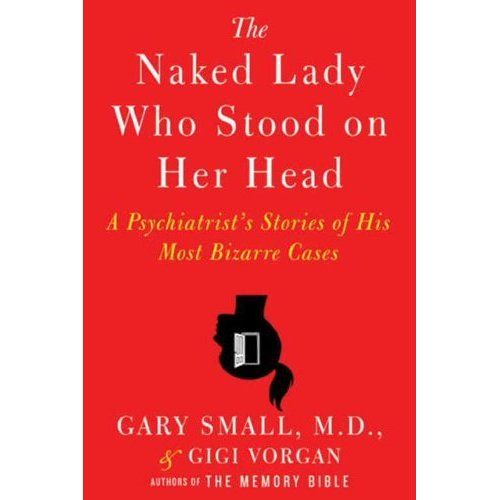
The Naked Lady Who Stood On Her Head ©2010 William Morrow Publishing, all rights reserved.

One of the most captivating books of 2010 was not a gory science-fiction thriller or a gripping end-of-the world page-turner, though its subject matter is equally engrossing and out of the ordinary. It is about somewhat crazy people doing crazy things as seen through the lenses of the man that has been treating them for decades. The Naked Lady Who Stood On Her Head is the first psych ward memoir, a tale of a curious doctor/scientist and his most extreme, bizarre, and sometimes touching cases from the nation’s most prestigious neurology centers and universities. Included in ScriptPhD.com’s review is a podcast interview with Dr. Small, as well as the opportunity to win a free autographed copy of his book. Our end-of-the year science library pick is under the “continue reading” cut.

Digg This
Reddit This
Stumble Now!
Buzz This
Vote on DZone
Share on Facebook
Bookmark this on Delicious
Kick It on DotNetKicks.com
Shout it
Share on LinkedIn
Bookmark this on Technorati
Post on Twitter
Google Buzz (aka. Google Reader)
Share

Comic-Con 2010: Day 4

27
Jul
1

As Comic-Con winds down on the shortened Day 4, we conclude our coverage with two panels that exemplify what Comic-Con is all about. As promised, we dissect the “Comics Design” panel of the world’s top logo designers deconstructing their work, coupled with images of their work. We also bring you an interesting panel of ethnographers, consisting of undergraduate and graduate student, studying the culture and the varying forces that shape Comic-Con. Seriously, they’re studying nerds! Finally, we are delighted to shine our ScriptPhD.com spotlight on new sci-fi author Charles Yu, who presented his new novel at his first (of what we are sure are many) Comic-Con appearance. We sat down and chatted with Charles, and are pleased to publish the interview. And of course, our Day 4 Costume of the Day. Comic-Con 2010 (through the eyes of ScriptPhD.com) ends under the “continue reading” cut!

Digg This
Reddit This
Stumble Now!
Buzz This
Vote on DZone
Share on Facebook
Bookmark this on Delicious
Kick It on DotNetKicks.com
Shout it
Share on LinkedIn
Bookmark this on Technorati
Post on Twitter
Google Buzz (aka. Google Reader)
Share

REVIEW: "Splice" (includes VIDEO interview with cast + crew)

3
Jun
1

Splice ©2010 Warner Brothers Entertainment, all rights reserved.

About a week and a half ago, scientists achieved a remarkable evolutionary stepping stone in the technological holy grail of eventually engineering synthetic life. Nicknamed ‘Synthia’ by her experimental progenitors, the latest discovery is a viable, self-propagating yeast cell hosting a bacterial Mycoplasma mycoides genome (consisting of non-biological DNA) purely composed in the laboratory. In eerily apt timing, Splice, a new science fiction thriller premiering this week, explores the scientific ramifications and bioethical morass encompassing the creation of a human-animal hybrid by a rogue superstar genetics couple. Under the “continue reading” cut, ScriptPhD.com’s review of Splice, discussion of the expanding frontiers of genetic engineering, and a special video interview with the director/writer, producer and stars of the film.

Digg This
Reddit This
Stumble Now!
Buzz This
Vote on DZone
Share on Facebook
Bookmark this on Delicious
Kick It on DotNetKicks.com
Shout it
Share on LinkedIn
Bookmark this on Technorati
Post on Twitter
Google Buzz (aka. Google Reader)
Share

Guest Article: The Idea-Monger: No Genius Required by Mark Changizi (Podcast)

25
May
5

The Vision Revolution by Mark Changizi. ©2010 BenBella Books, all rights reserved

Dr. Mark Changizi, a cognitive science researcher, and professor at Rensselaer Polytechnic Institute, is one of the most exciting rising stars of science writing and the neurobiology of popular culture phenomena. His latest book, The Vision Revolution, expounds on the evolution and nuances of the human eye—a meticulously designed, highly precise technological marvel that allows us to have superhuman powers. You heard me right; superhuman! X-ray vision, color telepathy, spirit reading, and even seeing into the future. Dr. Changizi spoke about these ideas, and how they might be applied to everything from sports stars with great hand-eye coordination to modern reading and typeface design with us in ScriptPhD.com’s inaugural audio podcast. He also provides an exclusive teaser for his next book with a guest post on the surprising mindset that makes for creative people. Read Dr. Changizi’s guest post and listen to the podcast under the “continue reading” cut.

Digg This
Reddit This
Stumble Now!
Buzz This
Vote on DZone
Share on Facebook
Bookmark this on Delicious
Kick It on DotNetKicks.com
Shout it
Share on LinkedIn
Bookmark this on Technorati
Post on Twitter
Google Buzz (aka. Google Reader)
Share

Earth Week INTERVIEW: 'Tapped' Director/Producer Stephanie Soechtig

20
Apr
9

Tapped poster and logos ©AtlasFilms, all rights reserved.

Back in March, we reviewed the stirring documentary Tapped, which chronicles the harmful environmental and health impact of our bottled water addiction. Since our World Water Day 2010 coverage, the filmmakers have embarked on an ambitious “Get Off The Bottle” 30 city, 30 day bus tour, set to conclude on April 22, Earth Day. Tapped director and producer Stephanie Soechtig took time out from the tour to talk to ScriptPhD.com about the tour, their efforts to educate people about bottled water, how the film’s release has impacted her, her wishes for changes in the advertising and marketing of bottled water, and things we can all do to make that happen. Day 2 of our Earth Week coverage continues on the theme of how valuable water is to our environment. For our interview with Stephanie, please click “continue reading.”

Digg This
Reddit This
Stumble Now!
Buzz This
Vote on DZone
Share on Facebook
Bookmark this on Delicious
Kick It on DotNetKicks.com
Shout it
Share on LinkedIn
Bookmark this on Technorati
Post on Twitter
Google Buzz (aka. Google Reader)
Share

INTERVIEW: Breaking Bad Creator/Executive Producer Vince Gilligan

13
Apr
2

Breaking Bad images and logo ©AMC Television and Sony Pictures, all rights reserved.

Last year around this time, ScriptPhD.com posted Breaking Bad, Chemistry Good, an in-depth article about AMC’s breakout hit Breaking Bad, and its stunningly accurate science content. Walter White, the show’s anti-hero, is a cancer-stricken high school chemistry teacher who starts cooking and dealing methamphetamine for financial security. In our article, we highlighted several clever uses of chemistry throughout the show’s run that not only integrated brilliantly into the plot but had realistic real-world applications as well. What a difference a year makes! Last week, Editor Jovana Grbić sat down with Breaking Bad‘s delightful Creator and Executive Producer Vince Gilligan to talk about the show’s origins, the science, and some behind-the-scenes secrets that will surprise even dedicated fans. We hope you enjoy reading our interview as much as we enjoyed chatting with him. The secrets of Breaking Bad, under the “continued reading” cut.

Digg This
Reddit This
Stumble Now!
Buzz This
Vote on DZone
Share on Facebook
Bookmark this on Delicious
Kick It on DotNetKicks.com
Shout it
Share on LinkedIn
Bookmark this on Technorati
Post on Twitter
Google Buzz (aka. Google Reader)
Share

Video: ScriptPhD Interviews the Science Advisor of 'Fringe'

9
Feb
1

Fringe images ©2008 FOX Broadcasting Corporation, all rights reserved.

ScriptPhD.com’s coverage of Comic-Con 2009 included an interesting panel entitled Mad Science: The Science Behind Science Fiction, which consisted of a panel of top science fiction shows Eureka, Battlestar Galactica, Eureka, Caprica and Fringe. There, we met Dr. Ricardo Gil da Costa, a neurobiologist who is one of the official science advisors to the writers of Fringe. We recently had the opportunity to visit Dr. Gil da Costa on location in his laboratory at the Salk Institute for Biological Studies in San Diego, CA. We sat down to talk about his science, what it’s like to be “on-call” for one of the biggest hit shows on television, how the writers use his knowledge and integrate it into the show, and more broadly, how creatives in the entertainment industry can best utilize the skills of research scientists as they integrate more sophisticated material into their scripts. To watch the video, please click “continue reading.”

Digg This
Reddit This
Stumble Now!
Buzz This
Vote on DZone
Share on Facebook
Bookmark this on Delicious
Kick It on DotNetKicks.com
Shout it
Share on LinkedIn
Bookmark this on Technorati
Post on Twitter
Google Buzz (aka. Google Reader)
Share

Forever Young: Living in an Age of Agelessness

28
Jan
1

The chemical compound resveratrol, a component of red wine that has been linked to anti-aging properties in laboratory experiments.

During a recent trip to New York City, I had the pleasure of befriending exciting new author Ernesto Robles, whose debut novel The Malthusian Catastrophe is a ScriptPhD.com recommended pick. Smart, topical, fast-paced and decidedly engrossing, this biomedical thriller drives at the roots of our cultural obsession with the “fountain of youth” and the perilous socioeconomic repercussions of actually finding and disseminating it. In a year when the Nobel Prize for Medicine and Physiology went to a team of researchers for their discovery of how chromosomes are protected by telomeres and the enzyme telomerase, essential biological components of the human aging machinery, and a cultural era that has anointed juvenescence as sacrosanct, Malthusian’s overarching themes are especially germane. ScriptPhD.com’s discussion includes a review of the book, the biology and ethics of current aging research, and a one-on-one interview with Mr. Robles. For full content, please click “continue reading.”

Digg This
Reddit This
Stumble Now!
Buzz This
Vote on DZone
Share on Facebook
Bookmark this on Delicious
Kick It on DotNetKicks.com
Shout it
Share on LinkedIn
Bookmark this on Technorati
Post on Twitter
Google Buzz (aka. Google Reader)
Share

On 'Creation', Charles Darwin, and Survival of the Fittest

22
Jan
0

There is grandeur in this view of life, with its several powers, having been originally breathed into a few forms or into one; and that, whilst this planet has gone cycling on according to the fixed law of gravity, from so simple a beginning endless forms most beautiful and most wonderful have been, and are being, evolved.

Charles Darwin

Charles Darwin’s postscript to perhaps the greatest work of biology ever recorded, The Origin of Species, ignited an acrimonious debate about science, religion, the mutual exclusivity thereof, and where we come from. 150 years later, as we celebrate the anniversary of Darwin’s monumental scientific achievement, it is a debate that has yet to abate. Regardless of what stance one takes on evolution and natural selection, fascination with the life and times of this inimitable figure is undeniable. A new biopic, Creation, delves into the dichotomy of Darwin the naturalist and family man, the disapproval he faced from a devotedly Christian wife, and the inner anguish he faced in whether to publish his findings. ScriptPhD.com’s Stephen Compson was recently treated to a private screening of the film and had the extraordinary opportunity to sit down with Darwin’s great-great-grandson Randal Keynes, whose Charles Darwin biography the movie was based on. For our exclusive content, please click “continue reading.”

Digg This
Reddit This
Stumble Now!
Buzz This
Vote on DZone
Share on Facebook
Bookmark this on Delicious
Kick It on DotNetKicks.com
Shout it
Share on LinkedIn
Bookmark this on Technorati
Post on Twitter
Google Buzz (aka. Google Reader)
Share

Bad Behavior has blocked 369 access attempts in the last 7 days.