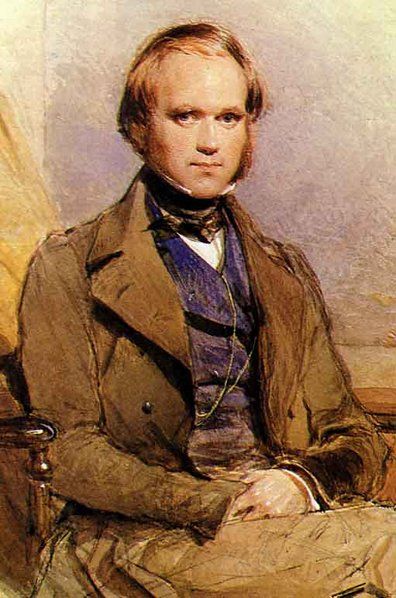
On 'Creation', Charles Darwin, and Survival of the Fittest

22
Jan
0

There is grandeur in this view of life, with its several powers, having been originally breathed into a few forms or into one; and that, whilst this planet has gone cycling on according to the fixed law of gravity, from so simple a beginning endless forms most beautiful and most wonderful have been, and are being, evolved.

Charles Darwin

Charles Darwin’s postscript to perhaps the greatest work of biology ever recorded, The Origin of Species, ignited an acrimonious debate about science, religion, the mutual exclusivity thereof, and where we come from. 150 years later, as we celebrate the anniversary of Darwin’s monumental scientific achievement, it is a debate that has yet to abate. Regardless of what stance one takes on evolution and natural selection, fascination with the life and times of this inimitable figure is undeniable. A new biopic, Creation, delves into the dichotomy of Darwin the naturalist and family man, the disapproval he faced from a devotedly Christian wife, and the inner anguish he faced in whether to publish his findings. ScriptPhD.com’s Stephen Compson was recently treated to a private screening of the film and had the extraordinary opportunity to sit down with Darwin’s great-great-grandson Randal Keynes, whose Charles Darwin biography the movie was based on. For our exclusive content, please click “continue reading.”

Digg This
Reddit This
Stumble Now!
Buzz This
Vote on DZone
Share on Facebook
Bookmark this on Delicious
Kick It on DotNetKicks.com
Shout it
Share on LinkedIn
Bookmark this on Technorati
Post on Twitter
Google Buzz (aka. Google Reader)
Share

INTERVIEW: Greenwriter.org

16
Sep
9
Logo ©2009 Greenwriter.org.  All rights reserved.

Logo ©2009 Greenwriter.org. All rights reserved.

Here at ScriptPhD.com, we are increasingly aware of science and technology that provides solutions to the stresses and threats facing our global environment. As part of a new series we are launching called “It’s Not Easy Being Green”, we are committed to bringing you coverage of the best “green initiatives”, especially those relating to the entertainment industry. With the help of the newest addition to the ScriptPhD.com family, talented European filmmaker Svetlana Dekic, ScriptPhD.com’s first video production is a filmed interview with environmentally-conscious company Greenwriter.org. Based in Hollywood, CA, Greenwriter.org is seeking to reinvent the way we buy and sell screenplays by establishing the first free online screenplay catalog service that directly connects writers worldwide with Hollywood production companies–all without having to print a single sheet of paper! Our interview, under the jump.

Digg This
Reddit This
Stumble Now!
Buzz This
Vote on DZone
Share on Facebook
Bookmark this on Delicious
Kick It on DotNetKicks.com
Shout it
Share on LinkedIn
Bookmark this on Technorati
Post on Twitter
Google Buzz (aka. Google Reader)
Share

INTERVIEW: Alex Tse, screenwriter of “Watchmen”

24
Aug
4

Who watches the Watchmen? A whole lot of people! One of the spring’s biggest breakout hits was director Zack Snyder’s cinema adaptation of the Alan Moore and Dave Gibbons classic 1989 graphic novel, Watchmen. ScriptPhD.com first caught up with one of the Watchmen screenwriters, rising star Alex Tse, during this summer’s Los Angeles Film Festival, and sat down with him recently to talk about the experience of working on the blockbuster. Before being contracted on the Watchmen project, Tse got his big break when his first script, Sucker Free City, was produced by Showtime Television and directed by Spike Lee. His current projects include a collection of sci-fi and comics screenplays, including the 1951 collection of science fiction short stories The Illustrated Man, the 2005 American thriller novel The Winter of Frankie Machine, the anime Ninja Scroll, and a film adaptation of the upcoming graphic novel Battling Boy by Paul Pope. Tse grew up in the San Francisco area before attending Emmerson College in Boston. Our full transcript under the “continue reading” jump.

Digg This
Reddit This
Stumble Now!
Buzz This
Vote on DZone
Share on Facebook
Bookmark this on Delicious
Kick It on DotNetKicks.com
Shout it
Share on LinkedIn
Bookmark this on Technorati
Post on Twitter
Google Buzz (aka. Google Reader)
Share

The Humanitarian Side of a Software Leader: Microsoft and Global Disaster Response

9
Aug
2
UN Undersecretary-Gen for Humanitarian Affairs John Holmes chats with women in war-torn Akobo, Sudan. Photo courtesy AFP.

UN Undersecretary-Gen for Humanitarian Affairs John Holmes chats with women in war-torn Akobo, Sudan. Photo courtesy AFP.

When was the last time that you tuned into CNN in the midst of a developing global crisis and heard about the power of software technology? The more likely scenario is a cavalcade of jarring images—displaced children wading knee-deep in floodwaters, distraught earthquake victims climbing through the rubble of utter destruction, panic embodied in a sea of facemasks—coupled with desperate pleas for food, water, medical supplies, donations, and on-the-ground manpower. But how is information assessed and distributed to the humanitarian relief agencies and governments that converge on often under developed disaster zones? And who enables the logistics of distributing supplies where needed in the middle of chaos? Rarely, if ever, is enough credit given to the technology, web and software support that coordinates these efforts and makes them possible. Microsoft has been using technology to help respond to and manage the effects of natural disasters through its local impacted offices for many years, but in 2007, Microsoft Corporation formally launched a centralized Microsoft® Disaster Response program expanding its breadth and depth in reach to provide sustaining global coverage. For our full profile and exclusive sit-down interview with Program Director Claire Bonilla, please click “continue reading”.

Digg This
Reddit This
Stumble Now!
Buzz This
Vote on DZone
Share on Facebook
Bookmark this on Delicious
Kick It on DotNetKicks.com
Shout it
Share on LinkedIn
Bookmark this on Technorati
Post on Twitter
Google Buzz (aka. Google Reader)
Share

INTERVIEW: Best-Selling Author and Medical Doctor Josh Bazell

3
Aug
0
Dr. Josh Bazell, author of medical mystery Beat the Reaper

Dr. Josh Bazell, author of medical mystery "Beat the Reaper"

ScriptPhD.com recently reviewed and recommended a new medical mystery thriller, “Beat the Reaper”, written by real-life medical doctor Josh Bazell. A longtime aspiring writer, Josh majored in English Literature with Honors at Brown University, after which he entered the English Lit PhD program at Duke. He ultimately chose to pursue a post-graduate degree in medicine at Columbia University, and completed his residency in the Department of Psychiatry at the University of California at San Francisco. He is currently working on his second book and is a practicing psychiatrist.

In between getting ready to release “Beat the Reaper” as a paperback, with a Leonardo di Caprio-starring film adaptation in the works, and writing his follow-up novel, a busy Dr. Bazell generously lent us some time to chat. To read our interview, please click “continue reading”.

Digg This
Reddit This
Stumble Now!
Buzz This
Vote on DZone
Share on Facebook
Bookmark this on Delicious
Kick It on DotNetKicks.com
Shout it
Share on LinkedIn
Bookmark this on Technorati
Post on Twitter
Google Buzz (aka. Google Reader)
Share

Comic-Con 2009: DAY 2 Coverage

25
Jul
1

Greetings! Day 2 of Comic-Con was a very scaryspecial occasion: Official Star Wars Day. Yes, the personal hygiene was questionable and the light sabers were many, but the ScriptPhD soldiered on to bring you our coverage of as much science entertainment content as you can pack in one website. Today we start by putting the science in science fiction with the special 10th Anniversary Farscape reunion panel, including information about their new DVD box set release and upcoming projects. ABC’s electrifying new science-fiction serial thriller FlashForward provided a world premiere sneak peek of the first 15 minutes of the pilot and a special guest surprised the audience. Our press room coverage from Day 2 includes some phabulous physics with CBS’s Emmy-nominated Big Bang Theory, including a one-on-one interview with Emmy nominee Jim Parsons, who talked to ScriptPhD.com about his journey into science and preparation to play a science geek, and Bones, including interviews with star Emily Deschanel and showrunner Hart Hanson. We also have our daily Comic-Con Costume of the Day and the Light Saber Count Tally. Stay along for the ride with ScriptPhD.com. Click “continue reading” for more!

Digg This
Reddit This
Stumble Now!
Buzz This
Vote on DZone
Share on Facebook
Bookmark this on Delicious
Kick It on DotNetKicks.com
Shout it
Share on LinkedIn
Bookmark this on Technorati
Post on Twitter
Google Buzz (aka. Google Reader)
Share

Comic-Con 2009: DAY 1 Coverage

24
Jul
6

Greetings from sunny San Diego, California! The geekiest of the geeky have gathered at this oceanside oasis for a non-stop four day celebration of comics, television, film and gaming. As Comic-Con gets underway, we here at ScriptPhD.com hope that our comprehensive coverage gives you a slice of the action (especially pertaining to our forte, science and technology in entertainment) and that through our words and pictures, you feel as though you achieved Nerdvana right here with us. Today’s coverage kicks off with Warner’s highly anticipated motion comics panel, where they debuted world premieres of several motion comics and rounded up top talent in graphic novels to atlk about the direction of modern comics. From there, we will segue to some Battlestar Galactica nostalgia, courtesy of Richard Hatch’s popular yearly panel. This year was devoted solely to fan questions! Our press room coverage of popular shows Psych and Burn Notice will quell your burning curiosities about what’s in store for those shows, and we end the day with Discovery Magazine’s panel Mad Science: The Science of Science Fiction (co-sponsored with the Science and Entertainment Exchange), including writers from Fringe, Eureka and much, much more. We also have our first ScriptPhD.com Comic-Con Costume of the Day, a complete pictorial roundup on our Facebook page and insider interviews gallore from your favorite writers and actors! To read Day 1 coverage, please click “continue reading”.

Digg This
Reddit This
Stumble Now!
Buzz This
Vote on DZone
Share on Facebook
Bookmark this on Delicious
Kick It on DotNetKicks.com
Shout it
Share on LinkedIn
Bookmark this on Technorati
Post on Twitter
Google Buzz (aka. Google Reader)
Share

The Brains Behind Battlestar’s Science: A Conversation With NASA’s Kevin Grazier

18
Jul
8
Dr. Kevin R. Grazier, NASA scientist at the Jet Propulsion Laboratory in Pasadena, CA and science advisor to television shows Battlestar Galactica, Eureka and Virtuality

Dr. Kevin R. Grazier, NASA scientist at the Jet Propulsion Laboratory in Pasadena, CA and science advisor to television shows "Battlestar Galactica", "Eureka" and "Virtuality"

Remember earlier this summer when ScriptPhD.com covered the Battlestar Galactica cast and crew’s appearance at the Paley Television Festival and promised you a very special look at the science of Battlestar in commemoration of the DVD box set release July 28th? Well, when we promise something, we deliver. ScriptPhD.com was proud and extraordinarily fortunate to sit down with Dr. Kevin Grazier, the man who made the FTL drive and Galactica’s space endeavors possible. In a candid, thorough interview, we talk about the physics of BSG, the inside secrets behind some of your favorite moments from the show, answer burning fan questions and address some of the controversy surrounding the series finale. Honest, witty, and informative, this is an interview you don’t want to miss! To read it, click “Continue Reading”.

Digg This
Reddit This
Stumble Now!
Buzz This
Vote on DZone
Share on Facebook
Bookmark this on Delicious
Kick It on DotNetKicks.com
Shout it
Share on LinkedIn
Bookmark this on Technorati
Post on Twitter
Google Buzz (aka. Google Reader)
Share

MOVIE REVIEW: The Last Beekeeper

20
Jun
2

“The Last Beekeeper”
ScriptPhD Grade: A

The Last Beekeeper, a World of Wonder production.

The Last Beekeeper, a World of Wonder production.

A compelling, socially and scientifically significant new film is buzzing its way into the 2009 Los Angeles Film Festival. From director Jeremy Simmons, The Last Beekeeper is a stirring new documentary that explores the ramifications of Colony Collapse Disorder (CCD), the mysterious HIV-like pandemic killing bees en masse, on beekeepers, the pollination industry, and our ecosystem. The filmmakers follow the lives of three beekeepers over the course of a year, as they prepare and transport their bees to California’s massive annual almond pollination, an event that requires the assembly of nearly all American bees. In depicting their struggles, triumphs, and personal pain, the film delves into the scientific mystery behind CCD, the personal relationship that bonds an apiarist to their bees, and the lengths of devotion three human beings take to save themselves and an insect in crisis.

Nicole Ulibarri might have had a very different calling in life. Described by her family as smart and ambitious, Nicole got a college education and became a Seattle career woman. But she also comes from several generations of beekeepers, and the calling, along with anguish over a painful family loss, led her heart back to Montana, where she became a beekeeper. Eric Mills is probably the most interesting Southern-to-the-core gay beekeeper you’ll ever meet. Meticulous, obsessed, at times arrogant, and profoundly gifted at his profession, Eric sums up his philosophy: “If you take care of the bees, they will take care of you.” Matt Hutchins is the archetype of many blue-collar, self-made small business owners in America. His struggling rural Washington business has been decimated by dying bees, but Matt’s perseverance, sense of obligation, and love of his craft drives his desire to keep going. In 1996, the almond industry got a huge boost when California led research efforts on the health effects of almonds, leading to a doubling of almond consumption worldwide. California is the industry leader in almond production, growing 80% of the world’s supply. The caveat is that almonds are almost completely reliant on bee populations for pollination. As such, the yearly California crop acts as a sort of beekeeper’s “Yukon gold rush”. 75% of all American beekeepers head out to California yearly to pollinate almonds, and rely on this event to earn most of their income (approximately $150 for a full hive). Among them are Nicole, Eric and Matt. Would their hives survive the stressful voyage to California? Could they beat the unbelievable odds against them to make a year’s worth of work pay off?

What is Colony Collapse Disorder? Beginning in October 2006, some beekeepers began reporting losses of 30-90 percent of their hives. In 2007, 20 billion bees disappeared. This phenomenon, for which scientists have not been able to elucidate a cause, has been termed “Colony Collapse Disorder”. The main symptom of CCD is simply no or a low number of adult honey bees present but with a live queen and no dead honey bees in the hive. In a 2007 report prepared for Congress by the National Academy of Sciences National Research Council’s (NRC) “Status of Pollinators Committee”, several factors were isolated as contributing to CCD, including invasive parasitic varroa mites, introduction of Africanized honeybees to replace dying European colonies, resistance to antibiotics treating American foulbrood, the major bacterial disease affecting honey bees, poor nutrition, the small hive beetle, the use of insecticides in crop protection and the stress inflicted on dwindling US hives in almond pollination. In response to this crisis, the Agricultural Research Service arm of the US Department of Agriculture has released an action plan to mitigate honeybee losses from CCD. Heavily featured in The Last Beekeeper, Professor Dennis vanEngelsdorp and his group at the University of Pennsylvania are attempting to figure out the exact reasons bees are dying in droves. After conducting autopsies on thousands of dead bees, the sick bees were found to be bigger, darker, with alarming multi-disease abnormalities, indicating a systemic immunity collapse akin to HIV infection. Incidentally, for one of the best explanations of CCD and celebrations of beekeepers, check out this video TED Talk entitled “Where Have All The Bees Gone?” presented by Professor vanEngelsdorp, in which he delves into the gentle, misunderstood creature’s important place in nature and the mystery behind its alarming disappearance:


Beekeeping is an essential component of modern agriculture, providing pollination services for over 90 commercial crops grown in the United States. The honey bee adds $15 billion in value to agricultural crops each year, and the demand for honey bees is growing. The California almond crop alone uses 1.3 million colonies of bees for pollination, approximately one half of all honey bees in the United States.

Several important running themes are explored throughout this movie, with disappearing bees as the background context. Loss and devotion at all costs. Through all three stories told runs a profound sense of loss (whether Nicole’s personal tragedy or Matt’s hive devastation) and the cost of being a modern beekeeper. Matt’s decisions cause tremendous strife within his family, while Eric, whose partner quit his job to assist him with the business, sees himself as fungible compared to the bees. Bees as humanlike creatures. Through some very adroit camera work, Simmons is able to provide a rare emotional purview into the world of bees helping one another, working together, dying together. Above all else is the love of the bees. The beekeepers portrayed in this film make tremendous sacrifices, professionally and personally, but are motivated and driven because of a core love for the bees. At times gut wrenching, The Last Beekeeper effectively communicates the frustration and helplessness these caretakers feel.

If the current situation does not improve, the future for beekeepers looks pretty grim. As it stands, there are less than 1,600 beekeepers in all of the United States. (In 1950, there were 500,000.) At the rate they are dying, bees will cease to exist in North America by 2035. It is up to scientists, environmental activists, and ordinary citizens to take action, get informed, and prevent these assiduous, necessary, beautiful creatures from disappearing from our planet. At the end of the movie, sitting in his nearly devastated, ghostly apiary, beekeeper Jim Robertson sadly muses how much honeybees serve by nature. They make enough honey for themselves and everyone else, but we are constantly trying to get more out of them than they can give us. “It’s foolishness,” he remarks quietly. Foolishness, indeed.

The Last Beekeeper is a World of Wonder film, directed by Jeremy Simmons and produced by Fenton Bailey and Randy Barbato. It premiered at the SXSW Film Festival on March 14th, 2009. It is an official selection of the 2009 Los Angeles Film Festival, and has two screenings: Saturday, June 20, at 2:30PM at the Regent Theater (already passed), and on Thursday, June 25, at 4:45PM at the Landmark 4.

ScriptPhD.com had the opportunity to talk with Jeremy Simmons and Fenton Bailey and get their in-depth thoughts on the film and the beekeepers. For a transcript of our interview, please click “continue reading”.

Digg This
Reddit This
Stumble Now!
Buzz This
Vote on DZone
Share on Facebook
Bookmark this on Delicious
Kick It on DotNetKicks.com
Shout it
Share on LinkedIn
Bookmark this on Technorati
Post on Twitter
Google Buzz (aka. Google Reader)
Share

TV REVIEW: Nurses Ratchet Up the Medical Show Ladder

15
Jun
2

Suddenly, in the world of TV medicine, RN are the letters you want after your name. Two summer cable shows garnering considerable buzz, SHOWTIME’s Nurse Jackie and TNT’s HawthoRNe, shine the spotlight on nurses, the hospital heroes often relegated into the shadows of doctors on prime time. ScriptPhD.com got a sneak peak of the HawthoRNe pilot and the first half of the Nurse Jackie season.

Nurse Jackie (SHOWTIME)
ScriptPhD Grade: A

This job is wading through a sh*tstorm of people who come in here on the worst day of their lives.  Doctors are here to diagnose, not heal.  We heal.  Nurse Jackie photo © SHOWTIME and Lionsgate.

"This job is wading through a sh*tstorm of people who come in here on the worst day of their lives. Doctors are here to diagnose, not heal. We heal." Nurse Jackie photo © SHOWTIME and Lionsgate.

I didn’t want to love Nurse Jackie, I just want to say that for the record. First of all, she’s been taunting me on the billboards of Los Angeles all spring and summer long with that intimidating needle. Secondly, I didn’t know if I had it in me to get attached to yet another medical show. Third, after hooking me with brilliant shows like Dexter, Weeds and newcomer The United States of Tara, could SHOWTIME extend their magic touch to this newest addition to their franchise? They could, they did, and the result is some of the freshest television this side of basic cable. Starring three-time Emmy®-winner Edie Falco, Nurse Jackie is based on the provocative tell-all journal of a real-life Manhattan nurse. Shot on location in New York City, the show spares nothing in projecting the goings-on of a big-city ER through the eyes of one very unorthodox nurse.

And Jackie Peyton is certainly not an easy character to love. She’s decidedly cantankerous and has little time for people or their stupidities. “I don’t do chatty,” she barks. “I like quiet. Quiet and mean. Those are my people.” She’s got an unhealthy attachment to painkillers. No matter the delivery system (mouth, nose, coffee) or the type (Adderall, Vicodin, OxyContin, Percocet), Jackie’s not very picky. She views rules as bendable at best, nonexistent at worst. Oh yeah, and then there’s the part where she’s cheating on her husband. But there’s two sides to every coin, and Jackie is no exception. At home, he’s a devoted wife and mother. Her picture-perfect husband Kevin (Dominic Fumusa) struggles between tending to their daughters Grace, sporting an escalating emotional anxiety disorder, and Fiona (Ruby Jerins and Daisy Tahan) and running his bar. At the ironically named All-Saints Hospital, she’s an extraordinary, deeply empathetic nurse. Whether she’s helping a 10-year-old take care of her mom with some contraband pharmacy supplies, assisting a terminally ill fellow nurse, helping a mute stroke victim shut up his obnoxious family or stealing money from a criminal to help a dead patient’s poor fiance, Jackie weaves through the murky moral grey area to ultimately do what’s right for her patients. Part saint, part sinner, Nurse Jackie is never less than totally compelling.

Trailing Jackie’s every move (much to her dismay) is overly earnest, perky nursing student Zoey Barkow (Merritt Weaver). Luckily, Jackie can take reprieve from her besotted young acolyte and her problems with the rest of her hospital family. Providing cover is her partner in crime, fellow nurse Mohammed “Mo-Mo” de la Cruz (Haaz Sleiman), with whom she bends the rules, shares coffee breaks and romantic advice. Providing narcotics and lunchtime quickies is pharmacist Eddie Walzer (Paul Schulze). Her best friend and confidante is the wry Brit Dr. Eleanor O’Hara (a razor-sharp Eve Best). She has a penchant for expensive clothes, snappy comebacks and mid-town lunchcapades with “Jacks”, but seems to be holding back a painful past. Peter Facinelli (Damages) is the handsome, young Dr. Fitch “Coop” Cooper, who could easily be dismissed as a one-dimensional, book smart but inept playboy. But with lesbian moms (the devine Blythe Danner and Swoozie Kurtz), a proclivity for Tourette’s-like inappropriate touching, and better doctor skills than he gives himself credit for, Coop is more than meets the eye. Rounding out the ensemle is rote ER administrator Gloria Akalitus (The West Wing’s Anna Deveare Smith), who rules with an iron fist, thinking she’s hip to every trick in the book. (By the way, who knew Deveare Smith had such a gift for physical comedy? Two gags with a Taser and some wayward painkillers had me rolling on the floor.)

Employing top-notch writing and directing, led by creative team Evan Dunsky, Liz Brixius and Linda Wallem, Nurse Jackie shies away from tired old medical show tropes to peel back the layers of a functional addict leading compartmentalized lives, to realistically show the challenges nurses face in saving lives under the limitations of our broken medical system, and to ask, “What does it really mean to be good?” Nurse Jackie may be addicted to bad behavior and every painkiller on the planet, but in the end, I’m addicted to her. I wouldn’t have it any other way.

Nurse Jackie airs on SHOWTIME Mondays at 10:30 EST/PT, following Weeds.

HawthoRNe (TNT)
ScriptPhD Grade: B

The cast of iHawthoRNe/i.  Image © Turner Broadcasting, 2009.

The cast of HawthoRNe. Image © Turner Broadcasting, 2009.

A number of high-profile film actors have recently settled comfortably in starring TV roles, most successfully Emmy® winners Glenn Close (Damages) and Alec Baldwin (30 Rock). TNT, with their long and storied tradition of strong female drama leads, from Kyra Sedgwick’s The Closer to Holly Hunter’s Saving Grace, extends the same small-screen opportunity to Jada Pinkett Smith, who stars in new medical drama HawthoRNe. Lest there be any doubt about the girl power behind this series, it is being co-produced by Pinkett Smith’s 100% Womon [sic] Productions. In the first five minutes alone, Christina Hawthorne races to Richmond Trinity Hospital in the middle of the night, out(wo)mans an armed security guard, tends to a wandering psych ward patient, pays care to a homeless woman she’s befriended and talks down a suicidal cancer patient. But it turns out, there are some cracks in Christina’s impenetrable armor. For one, the pilot takes place on the one-year anniversary of the death of her husband, whose ashes she still talks to. To celebrate, her rebellious, headstrong daughter Camille (Hannah Hodson) chains herself to the school’s vending machine, much to her mother’s consternation. And a deliciously saccharine Joanna Cassidy is the still-meddling mother-in-law who also serves on Trinity’s board.

As the hospitals Chief Nursing Officer, Christina is organized, uncompromising, decisive, empathetic, and always puts the needs of patients first. Her charges include nurse Bobbie Jackson (Suleka Matthew), one of her best friends and nurse Ray Stein (David Julian Hirsh), a man caught in a woman’s world. Alias’s Michael Vartan (welcome back to television Mr. Vaughn!) is Dr. Tom Wakefield, the Chief of Surgery with whom Christina often butts heads administratively, but who also treated her late husband for cancer.

Still working out its kinks, HawthoRNe feels a bit uneven at times, mostly due to relying on some trite, atavistic medical formulas that come off stale. A genuinely compelling storyline about a homeless woman besieged with mental problems giving birth outside the hospital is negated by an unnecessary (and gross!) side plot involving a grateful nurse (Christina Moore)…um…thanking a wounded soldier for his service. Her name is Candy. Seriously. And a chance to explore doctor-nurse synergy and conflict in providing effective patient care turns downright silly when the characters in question ride two extremes: the stupendously arrogant, omniscient doctor whose decisions Cannot. Be. Questioned. and the equally timorous nurse who dare not think independently. And don’t forget to save some snickers, because he’s a male nurse, which is funny, or was in 1975.

TNT may know drama, but HawthoRNe needs to tone it down a bit. To be fair, having only viewed the pilot, the show has definite potential to grow. With the departure of ER, no current medical show centerpieces medicine in a cash-strapped, blue-collar city hospital. Set in Richmond, VA, HawthoRNe has a unique opportunity to tell stories pertaining to the challenges of its setting and patient population. It also is clearly a character-driven drama, establishing some fascinating early relationships. The tension between Christina and her bitchy mother-in-law, tempered by working through the shared grief with her still-angry daughter, makes for a rather interesting family triangle. And sparks fly between Pinkett Smith and Vartan, who is obviously being set up as a potential love interest. But the biggest asset is Pinket Smith herself. She brings an intensity, compassion and resolve to a complex character. Her movie star power translates well to the small screen, and could easily make HawthoRNe a fine vehicle for her considerable acting chops. Assuming they steer clear of Clicheland.

HawthoRNe premieres this Tuesday, June 16th on TNT at 9 EST/PT.

This sudden focus on the nursing profession doesn’t come a minute too soon. According to the American Association of Colleges of Nursing, the United States is in the midst of an imminent nursing shortage, compounded by the rapidly aging baby boomer population and low enrollment in nursing programs that is not expected to meet this demand. As of July, 2007, total RN vacancies across the US totaled 135,000, or 8.1%, according to a report released by the American Hospital Association. Projections from the U.S. Bureau of Labor Statistics published in the November 2007 Monthly Labor Review foresee that more than one million new and replacement nurses will be needed by 2016. Contributing factors vary, from a shortage of nursing school faculty and projected enrollments, to a slowing rate of growth for the overall nursing population, resulting in a climbing average age of the nursing population. The result for nurses? Insufficient staffing is raising their stress levels, impacting job satisfaction, and driving many nurses to leave the profession. The result for patients? Inadequate access to quality health care. An eye-opening report released in August 2002 by the Joint Commission on Accreditation of Healthcare Organizations, revealed that a shortage of nurses in America’s hospitals is putting patient lives in danger. JCAHO examined 1609 hospital reports of patient deaths and injuries since 1996 and found that low nursing staff levels were a contributing factor in 24% of the cases.

Less than a month ago, members of major nursing unions that included the California Nurses Association/National Nurses Organizing Committee, the United American Nurses (UAN), and the Massachusetts Nurses Association, congregated on Capitol Hill as part of a National RN Day of Action in Washington, D.C., that included a conference focused on promoting legislation that would guarantee certain ratios of nurses to patients nationally, a march and rally, and visits to their congressional representatives to advocate on various legislative issues. The legislation, House Resolution 2273, also seeks to protect the rights of nurses to advocate on behalf of their patients, and to invest in training new nurses to address the current nationwide nursing shortage.

To discuss some of these issues, and to get a dose of real-life perspective on the profession, ScriptPhD.com sat down with Dr. Suzette Cardin, Assistant Dean of Student Affairs at UCLA’s venerable School of Nursing, ranked in the top ten of national nursing programs. Dr. Cardin has over 35 years of experience in nursing, and prior to her faculty appointment, she spent 14 years as Unit Director of the Critical Care Unit and the Cardiac Observation Unit at the UCLA Medical Center. She has been honored as a Fellow of the American Academy of Nursing and the American Heart Association. To read our interview, please click “continue reading”.

Digg This
Reddit This
Stumble Now!
Buzz This
Vote on DZone
Share on Facebook
Bookmark this on Delicious
Kick It on DotNetKicks.com
Shout it
Share on LinkedIn
Bookmark this on Technorati
Post on Twitter
Google Buzz (aka. Google Reader)
Share

Bad Behavior has blocked 499 access attempts in the last 7 days.