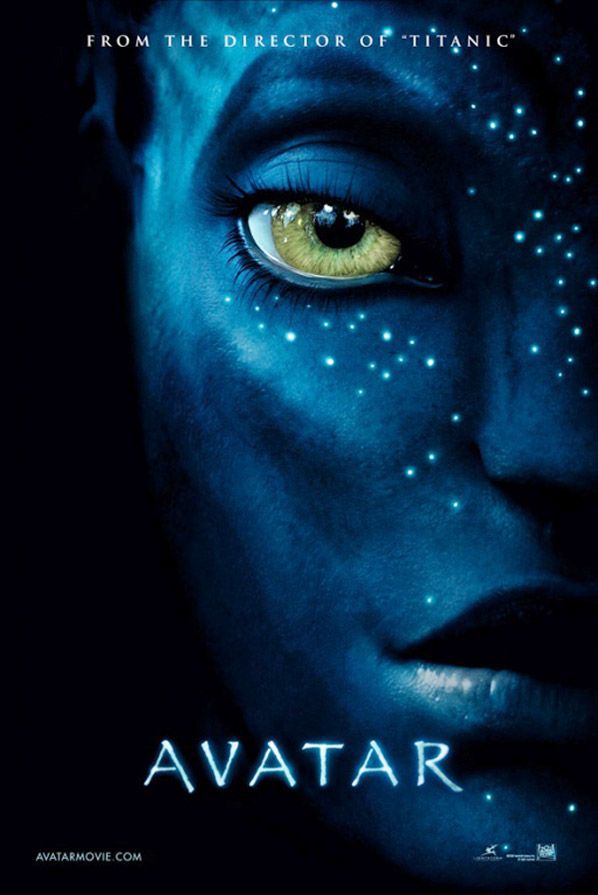
Behind Avatar: Science, Technology, Art and Design

14
Dec
14
Avatar ©2009 20th Century Fox.  All rights reserved.

Avatar ©2009 20th Century Fox. All rights reserved.

This weekend, millions of people will flock to IMAX theaters and cinemas around the world, 3-D glasses eagerly perched, in anticipation of James Cameron’s masterpiece Avatar, a cinematic œuvre fifteen years in the making. Underscoring this two and a half our epic lie unparalleled technological, scientific and artistic achievements, including the invention of a novel 3-D film camera, the complete biological and linguistic realization of a virtual world, and flawlessly integrated art direction and conceptual renderings. Many people’s post-viewing reaction will be, “How did they do that?!” ScriptPhD.com is proud to present a special Avatar preview that includes behind-the-scenes secrets and a review of the must-own companion design book The Art of Avatar. Before you see the movie, get to know it.

Digg This
Reddit This
Stumble Now!
Buzz This
Vote on DZone
Share on Facebook
Bookmark this on Delicious
Kick It on DotNetKicks.com
Shout it
Share on LinkedIn
Bookmark this on Technorati
Post on Twitter
Google Buzz (aka. Google Reader)
Share

Why Science is the Ultimate Blue-Chip Investment

11
Dec
1

The famous French scientist Louis Pasteur once said, “There are no such things as applied sciences, only applications of science.” As a nation we are continuing to find ourselves in increasingly difficult economic times. Our state and federally elected leaders are constantly under pressure to make difficult appropriations decisions at all levels of their budgets. At the federal level, the National Institutes of Health (NIH), our nation’s primary investor of biomedical research funding, is no exception during this economy. A recent New York Times article, The Science of Spending Stimulus Money Wisely, questioned the value of funding basic research at the cost of immediate jobs and dividends. Indeed, a central question regarding the public financing of biomedical research emerges more routinely: How do we strike the right balance between the funding of basic research and the funding of applied research? What is the value of each to scientific development, the pursuit of knowledge, and most importantly, mankind? These question have been debated for generations, largely because there is no right answer. There is no exact formula, or panel of experts that will be able to determine the exact dollar amount which should be spent in each area, nor is there a correct percentage by which the money should be divided between the two areas. The following article postulates that continued funding and public understanding of basic research, the foundation for all applied research, is the smartest long-term investment of all.

Digg This
Reddit This
Stumble Now!
Buzz This
Vote on DZone
Share on Facebook
Bookmark this on Delicious
Kick It on DotNetKicks.com
Shout it
Share on LinkedIn
Bookmark this on Technorati
Post on Twitter
Google Buzz (aka. Google Reader)
Share

The Humanitarian Side of a Software Leader: Microsoft and Global Disaster Response

9
Aug
2
UN Undersecretary-Gen for Humanitarian Affairs John Holmes chats with women in war-torn Akobo, Sudan. Photo courtesy AFP.

UN Undersecretary-Gen for Humanitarian Affairs John Holmes chats with women in war-torn Akobo, Sudan. Photo courtesy AFP.

When was the last time that you tuned into CNN in the midst of a developing global crisis and heard about the power of software technology? The more likely scenario is a cavalcade of jarring images—displaced children wading knee-deep in floodwaters, distraught earthquake victims climbing through the rubble of utter destruction, panic embodied in a sea of facemasks—coupled with desperate pleas for food, water, medical supplies, donations, and on-the-ground manpower. But how is information assessed and distributed to the humanitarian relief agencies and governments that converge on often under developed disaster zones? And who enables the logistics of distributing supplies where needed in the middle of chaos? Rarely, if ever, is enough credit given to the technology, web and software support that coordinates these efforts and makes them possible. Microsoft has been using technology to help respond to and manage the effects of natural disasters through its local impacted offices for many years, but in 2007, Microsoft Corporation formally launched a centralized Microsoft® Disaster Response program expanding its breadth and depth in reach to provide sustaining global coverage. For our full profile and exclusive sit-down interview with Program Director Claire Bonilla, please click “continue reading”.

Digg This
Reddit This
Stumble Now!
Buzz This
Vote on DZone
Share on Facebook
Bookmark this on Delicious
Kick It on DotNetKicks.com
Shout it
Share on LinkedIn
Bookmark this on Technorati
Post on Twitter
Google Buzz (aka. Google Reader)
Share

Bad Behavior has blocked 499 access attempts in the last 7 days.