
Guest Article: The Idea-Monger: No Genius Required by Mark Changizi (Podcast)
May4
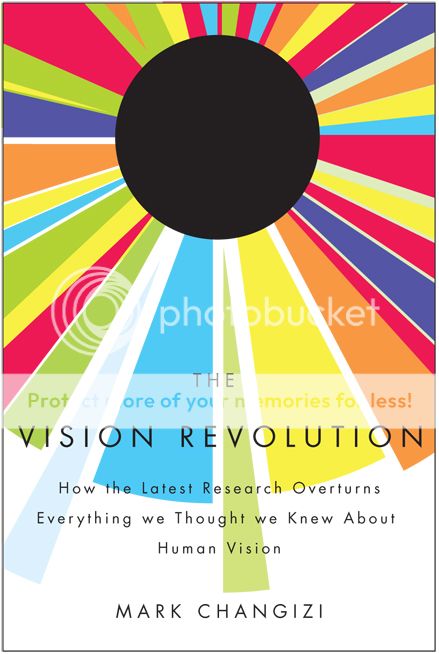
The Vision Revolution by Mark Changizi. ©2010 BenBella Books, all rights reserved
Dr. Mark Changizi, a cognitive science researcher, and professor at Rensselaer Polytechnic Institute, is one of the most exciting rising stars of science writing and the neurobiology of popular culture phenomena. His latest book, The Vision Revolution, expounds on the evolution and nuances of the human eye—a meticulously designed, highly precise technological marvel that allows us to have superhuman powers. You heard me right; superhuman! X-ray vision, color telepathy, spirit reading, and even seeing into the future. Dr. Changizi spoke about these ideas, and how they might be applied to everything from sports stars with great hand-eye coordination to modern reading and typeface design with us in ScriptPhD.com’s inaugural audio podcast. He also provides an exclusive teaser for his next book with a guest post on the surprising mindset that makes for creative people. Read Dr. Changizi’s guest post and listen to the podcast under the “continue reading” cut.


‘From Eternity to Here’ with Physicist Sean Carroll
May0
Physicist Sean Carroll's new book "From Eternity to Here." ©2010 Dutton Books, all rights reserved.
What is time? How does it work? Why is it immutably unidirectional (moving from the past and towards the future)? And most importantly, why does time exist at all? These are among the preeminent metaphysical questions to date for scientists and laypeople alike. Using the principles of entropy and universe expansion since the Big Bang, cosmologist Sean Carroll (recently profiled in the New York Times) hypothesizes about the arrow of time in a brilliant new book From Eternity to Here: The Quest for the Ultimate Theory of Time. In addition to reviewing the book, ScriptPhD.com’s in-house physics and astronomy guru, Stephen Compson, had an extraordinary opportunity to sit down with Dr. Carroll in his physics lab at Caltech University. In a stunningly in-depth, rich interview, they explored everything from the creation of our universe, to entropy, the time-space continuum, how physics and film intersect, and why the principles in Dr. Carroll’s book are important and topical for the general public to grasp. It’s rare to see this wide-ranging of a discussion on popular physics from such an authoritative researcher, so sit back, enjoy and click “continue reading” for more.
PROFILE: Popular Science’s Theo Gray
Mar0
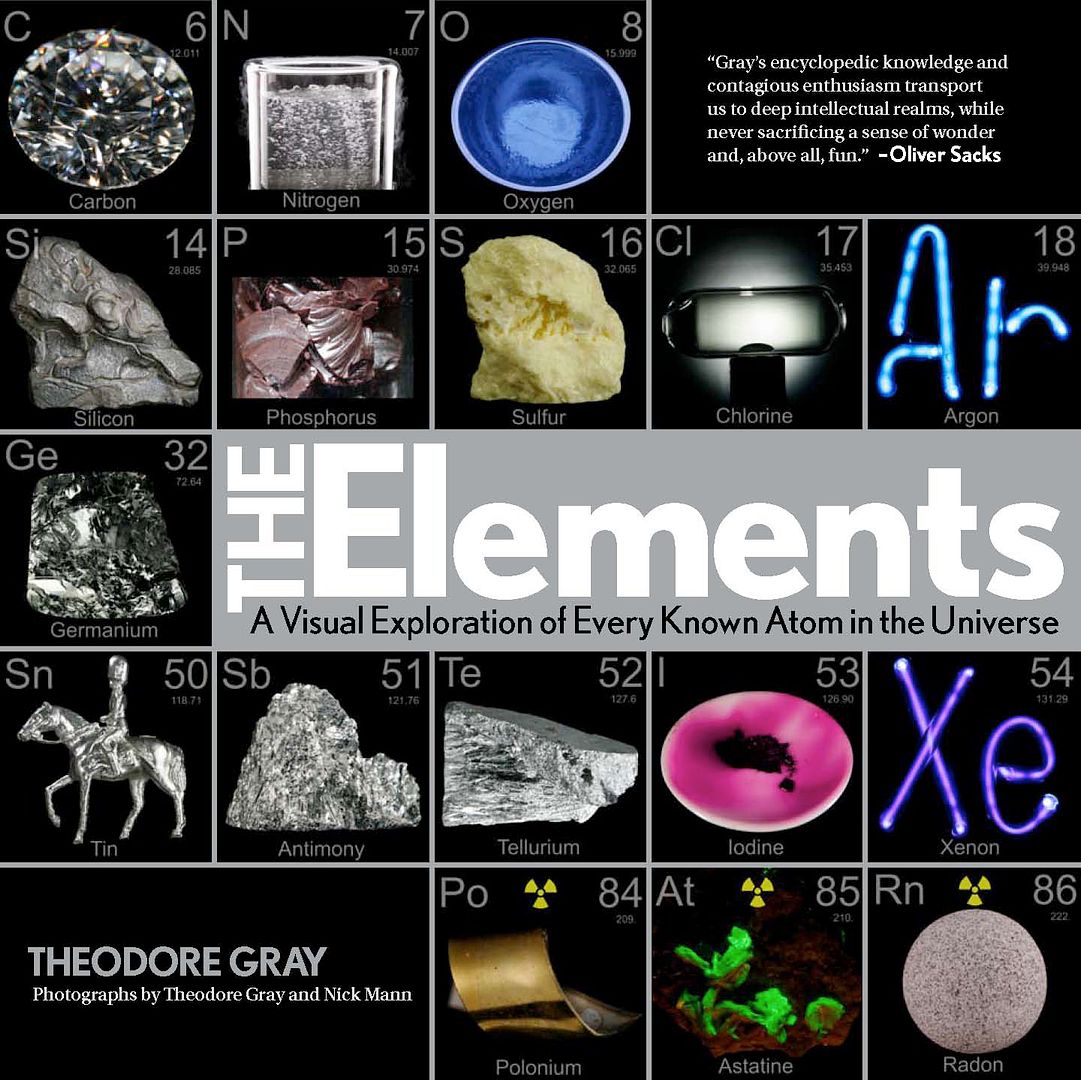
The Elements, a hardcover book of photography for every element in the periodic table. ©2009 Black Dog and Leventhal Publishing.
He is one of the most popular and explosive (sometimes literally!) science columnists of our day. Since 2005, he has written the Popular Science blog Gray Matter. He has been willing to try virtually any chemistry experiment known to man, all in the interest of proving a theory and educating (and entertaining) a fortunate lay audience. He has created the most widely acclaimed periodic table ever, which has been replicated into posters, an actual table, playing cards, and now, a gorgeous full-color hardcover book. Who is this mad scientist I am referring to? Why, Theodore Gray, of course! For Day 3 of Science Week, ScriptPhD.com is thrilled to review his new book The Elements, an equal parts homage to chemistry and photography. Editor Jovana Grbić sat down with Theo in a candid, in-depth interview about his books, his favorite elements, and the responsibility science writers have to informing the public. More more content, please click “continue reading.”
Forever Young: Living in an Age of Agelessness
Jan1
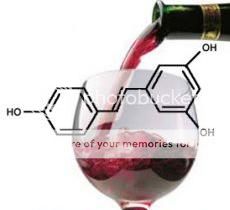
The chemical compound resveratrol, a component of red wine that has been linked to anti-aging properties in laboratory experiments.
During a recent trip to New York City, I had the pleasure of befriending exciting new author Ernesto Robles, whose debut novel The Malthusian Catastrophe is a ScriptPhD.com recommended pick. Smart, topical, fast-paced and decidedly engrossing, this biomedical thriller drives at the roots of our cultural obsession with the “fountain of youth” and the perilous socioeconomic repercussions of actually finding and disseminating it. In a year when the Nobel Prize for Medicine and Physiology went to a team of researchers for their discovery of how chromosomes are protected by telomeres and the enzyme telomerase, essential biological components of the human aging machinery, and a cultural era that has anointed juvenescence as sacrosanct, Malthusian’s overarching themes are especially germane. ScriptPhD.com’s discussion includes a review of the book, the biology and ethics of current aging research, and a one-on-one interview with Mr. Robles. For full content, please click “continue reading.”
On ‘Creation’, Charles Darwin, and Survival of the Fittest
Jan0
There is grandeur in this view of life, with its several powers, having been originally breathed into a few forms or into one; and that, whilst this planet has gone cycling on according to the fixed law of gravity, from so simple a beginning endless forms most beautiful and most wonderful have been, and are being, evolved.
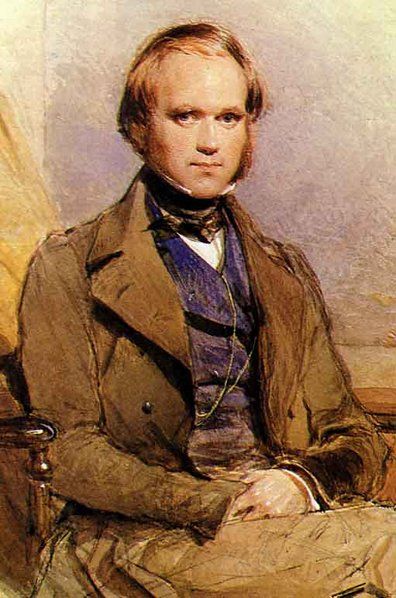
Charles Darwin
Charles Darwin’s postscript to perhaps the greatest work of biology ever recorded, The Origin of Species, ignited an acrimonious debate about science, religion, the mutual exclusivity thereof, and where we come from. 150 years later, as we celebrate the anniversary of Darwin’s monumental scientific achievement, it is a debate that has yet to abate. Regardless of what stance one takes on evolution and natural selection, fascination with the life and times of this inimitable figure is undeniable. A new biopic, Creation, delves into the dichotomy of Darwin the naturalist and family man, the disapproval he faced from a devotedly Christian wife, and the inner anguish he faced in whether to publish his findings. ScriptPhD.com’s Stephen Compson was recently treated to a private screening of the film and had the extraordinary opportunity to sit down with Darwin’s great-great-grandson Randal Keynes, whose Charles Darwin biography the movie was based on. For our exclusive content, please click “continue reading.”
GUEST POST: On Chemistry, Movies and Making Science Entertaining
Jan2
Reaction! Chemistry in the Movies is an Oxford University Press title. ©2009, all rights reserved.
One of my favorite movies as a kid, and now, as a professional scientist, is Andromeda Strain. The heroes are mostly older, professorial types who work feverishly to understand an alien organism and save the planet. After being asked to review ReAction! Chemistry in the Movies for ScriptPhD.com, I was so curious to consume (with relish) the book’s guesswork about the chemistry found in Andromeda Strain. After returning to the beginning of the book and giving it a read, I was thrilled to find that ReAction! is a detailed, thoughtful exploration of the representation of chemistry in film. The book addresses, first and foremost, the fact that chemistry can play a lead role in film. The authors also discuss the dichotomy between the “dark” and “bright” sides of chemistry (and science) as illustrated by films in which chemistry or chemists play a central role. Also included are several playful explorations of the real science behind some famous examples of fictional chemistry in film. After the break is a full review of the book along with an in-depth interview with authors Mark Griep and Majorie Mikasen on the process of working together as chemist and artist, portrayal of chemists in film and how film can change public perception in science.
REVIEW: The Road
Nov0
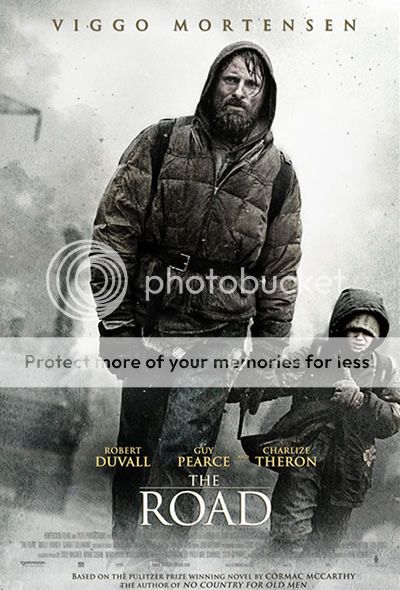
The Road movie poster is ©2009 Dimension Films, all rights reserved
Remember back in high school, when you’d skirt having to read the book by watching the movie instead, and your teacher would admonish you for not getting the most out of the experience? I never fully grasped what that meant until watching The Road, a new feature film adaptation of Cormac McCarthy’s Pulitzer Prize-winning survival epic. Though dedicated to realizing McCarthy’s scope of a ruined, uninhabitable planet and is a pleasant enough watch, the film ultimately can’t translate the book’s introspective vision and humanistic totality. Sometimes, it’s better sticking with the 1,000 words. Complete ScriptPhD.com review under the “continue reading” jump.
INTERVIEW: Best-Selling Author and Medical Doctor Josh Bazell
Aug0
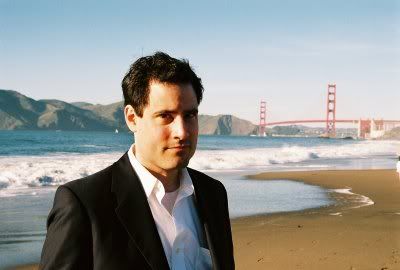
Dr. Josh Bazell, author of medical mystery "Beat the Reaper"
ScriptPhD.com recently reviewed and recommended a new medical mystery thriller, “Beat the Reaper”, written by real-life medical doctor Josh Bazell. A longtime aspiring writer, Josh majored in English Literature with Honors at Brown University, after which he entered the English Lit PhD program at Duke. He ultimately chose to pursue a post-graduate degree in medicine at Columbia University, and completed his residency in the Department of Psychiatry at the University of California at San Francisco. He is currently working on his second book and is a practicing psychiatrist.
In between getting ready to release “Beat the Reaper” as a paperback, with a Leonardo di Caprio-starring film adaptation in the works, and writing his follow-up novel, a busy Dr. Bazell generously lent us some time to chat. To read our interview, please click “continue reading”.
Comic-Con Roundup Post: condensed 4-day coverage
Jul0

Well, faithful readers, our press room interviews have been transcribed, our complete pictures have been edited and labeled and sleep has still not been had. Someday. To make it easier to enjoy all the Comic-Con goodness from start to finish, we have condensed our four days of coverage in one place. Enjoy and thanks so much for following the journey with us!
Day 1: Includes pictures and scoop from the Warner Motion Comics, Battlestar Galactica Retrospective and Mad Science: The Fiction of Science Fiction panels, and press room transcripts of Psych and Burn Notice.
Day 2: Includes pictures and transcripts from the Farscape 10th Anniversary Reunion and FlashForward panels along with full transcripts from press room interviews with Bones and Big Bang Theory
Day 3: Includes exclusive pictures and videos of the enormous Lost panel/arena rock event and the Futurama! and True Blood panels, as well as press room interview transcripts with talent from Fringe and MythBusters
Day 4: Includes exclusive pictures and transcripts of two final Sunday panels: Supernatural and the long-awaited Comic-Con appearance of David Tennant with the Dr. Who panel.
All four days of coverage include the ScriptPhD.com Costume of the Day, chosen from an array of pictures that you can browse through on our Facebook fan page and extra side interviews and scoop from all the wonderful actors and writers we ran into.
But wait! There’s more! I’ve saved two special surprises for our last post. The first is our ScriptPhD.com one-on-one sit-down with 24 writer/executive producer David Fury. We go in-depth behind the show’s themes of terrorism, torture, national security and how they extend to the real-world law enforcement reaction to the show. We also have a free fan giveaway of three copies of the Comic-Con 2009 40th Anniversary souvenir books handed out only onsite.
To read our interview and enter to grab your copy of the book, please click “continue reading”.
BOOK REVIEW: Medicine, Mafia Style!
Jul2
Beat the Reaper: A Novel
Written by: Josh Bazell
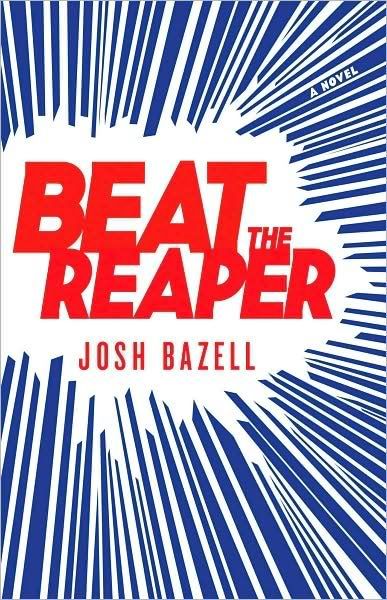
Beat the Reaper
House meets The Sopranos—there’s your Hollywood pitch line for the debut novel of talented newcomer Josh Bazell. But it’s so much more than that: part medical mystery, part action-adventure thriller, part character study, Beat the Reaper deftly explores the scope of revenge, loyalty and one’s capacity for redemption. We are introduced to the novel’s protagonist, a New York City doctor, as he’s getting mugged on his way to work. But rather than acquiescing, he expertly dislocates the mugger’s arm, smashes his nose in and takes his gun. Peter Brown is clearly no ordinary doctor. Left to fend for himself at the age of 14 after the vicious murder of his grandparents, Pietro Brnwa takes up karate and a fateful friendship with David Locano, aka Skinflick, whose father was a lawyer by day, a mobster by night. Initially attracted to the mafia for personal retribution, Brnwa descends deeper into the Locano family and their ties, and finds that he is disturbingly good at his job. A perfectly orchestrated series of events leads Pietro into murder, a test of his friendship with Skinflick and the threat of jail. Instead, he ends up at dingy, dilapidated Manhattan Catholic Hospital as Dr. Peter Brown, a member of WITSEC, the U.S. Marshal’s Service Witness Security Program. Peter’s anonymity comes to a crashing halt when he treats a blast from the past, in the form of terminally ill patient Eddy Squillante, who recognizes him as the erstwhile “Bearclaw” Brnwa. As long as he can keep Squillante alive, he staves off some angry mobsters looking to get reacquainted. To do so, he must navigate through a sea of other patients, a shady surgeon assigned to Squillante’s case, and external forces looking to ensure that he fails. Oh and by the way, he has eight hours. (Why is Peter known to the mobsters as Bearclaw? You’ll have to read the book and find out… it’s downright incriminating!)
Pietro Brnwa is a unique, memorable character in the best tradition of detective fiction heroes. Not one you’d call warm and fuzzy, he ascribes himself as “God’s original asshole” and his sycophantic medical students as “two cups of human misery in short white coats”. He has a short temper, a snarky aside for most everything and everyone that crosses his path, and generally looks at the glass as half empty. But Pietro also has a defined moral code of ethics. His very reason for joining the Mafia—to avenge his grandparents’ senseless death—is practical, not glamorous. He won’t kill women or children, as evidenced by his refusal to kill the sister of the man that sold his grandparents to Auschwitz. And he manages to show a tender side with the only woman he’s ever loved, and who plays a tragic role in the final showdown between his past and present. More importantly, Brnwa, as Peter Brown, is an excellent doctor. Sure he has plenty of insults for fellow physicians, no patience for patients, and crunches on Moxfane tables to stay awake enough for rounds. But he also cares enough to make time for a frightened cancer patient awaiting surgery, to retrieve a lost well-meaning elderly patient with dementia and to perform an impossible surgery on the dying Mob messenger that’s been sent to warn him. Okay, that last one was a necessity.
On top of the intricate action, mind-bending medicine and humor, the book’s style is immensely enjoyable—sexy, sleek, fast-paced, and a little too cool for old school. Bazell unfolds the plot cleverly with side-by-side storylines. Peter Brown’s impending peril is told compactly over the course of the eight hours that interweaves his reunion with old friends with an interesting medical mystery and a rather unfortunate incident with an Assman and a needle. All in a day’s work. Concomitantly, Pietro Brnwa’s story transpires over a more protracted period of time, and the reader absorbs the tragedies that befell Pietro from his early days in the mob through to the deal that lands him in witness protection, learning what makes him tick along the way. The past merges seamlessly with the present to culminate in an ending so shocking and imaginative, you will want to have an anatomy textbook, not to mention a strong stomach, to piece it all together. Interspersed throughout are little factoids and medical footnotes that add a rich third dimension to the novel’s flow and to our protagonist’s hilariously sarcastic wit. Did you know that scrub suits are reversible, that some of the most prosperous pharmaceutical companies had a shameful history of slave labor at Auschwitz, that you can’t run DNA tests from urine, that surgeons will use some pretty superfluous silly vocabulary to avoid saying “head up” or “head down” in surgery, or the real reason that Tony Soprano’s cover as a garbage consultant is ironic? Neither did I. Rarely does a thriller afford you the opportunity to pick up some knowledge while you’re being entertained, and for that, Beat the Reaper gets the ScriptPhD.com seal of approval!
As if all of this isn’t enough to get you excited, the book is currently being adapted for film by the same team of screenwriters that brought you Ocean’s Thirteen. There are even rumblings of Leonardo DiCaprio playing Peter Brown/Pietro Brnwa/Bearclaw. So go out and please support a local bookstore in picking up a copy today!
~*ScriptPhD*~


