
It’s Not Easy Being Green: Powering The Future (Podcast)
Jul0
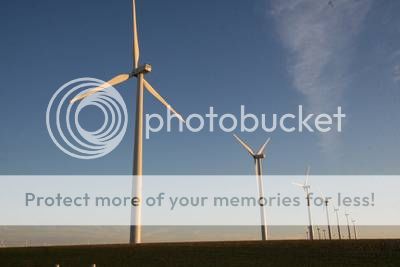
Wind turbines collecting energy that will eventually be converted into electricity and other fuel sources. This technology is widely discussed in the new Discovery Channel special "Powering The Future." Image courtesy of Discovery Channel.
Nothing has done more to reinvigorate discussions about energy and fuel dependence than the tragic oil spill currently afflicting the Gulf Coast [excellent resource for trajectory, timeline and news sources]. Though scientists and oil manufacturers continue to debate the validity of the “Peak Oil” theory, a very uncomfortable reality looms that oil production may not be able to keep up with thirsty demand. With an ever-increasing global population, a constant proliferation of technology choices and lifestyle improvements, and a rising middle class in third world countries, the factors contributing to fuel consumption may be the precipice of an eventual geopolitical crisis. In an effort to showcase their dedication to addressing the most salient energy and environmental questions affecting our generation, the Discovery Channel, backed by founder John Hendricks, is launching a revolutionary four-part documentary called Powering The Future. In it, they address a range of economics, national security, social and scientific questions related to energy and fuel all through the single focal point of searching for a modern, clean, limitless supply of energy. Our coverage of Powering the Future includes a review of the first installment and an exclusive podcast interview with the show’s host, lead scientist for the Nature Conservancy, Dr. M. Sanjayan. For full content, please click “continue reading.”


Guest Article: Beauty and the Building Blocks…
Jun0

The building blocks of life. Photograph courtesy of Dr. Ron Zuckermann
…a nanoscientist’s quest to mimic Nature’s molecular blueprints
Have you ever found yourself entranced by the exquisite beauty and complexity of living things? Like the intricacies of a budding flower, or the mesmerizing patterns on a butterfly’s wing? Have you ever wondered: “what are living things made of?” Are these materials just as beautiful if we were to zoom way way in and look at the actual molecular building blocks that make up life? Take a look at the interactive link The Scale of Things to see just how small the building blocks of life really are! Well the answer is “OMG – totally!” All living things share a ubiquitous set of molecular building materials we call proteins, and they are absolutely stunning! They are not only smashingly beautiful to look at, they are capable of performing a mind-numbing myriad of very intricate and complex functions that are essential to life. In a very special guest post, leading nanoscience Professor Ron Zuckermann of the renowned Lawrence Berkeley National Laboratory recounts his life’s mission as a chemist to try and build artificial microscale sheets made up of nature’s very own building blocks—proteins. Everything you wanted to know about what nanotechnology is, exactly, why engineering proteins is the science of the future, and what we plan to use these discoveries for, under the “continue reading” cut.
World Science Festival: Day 4 + Video
Jun0
The 2010 World Science Festival Runs in New York City from June 2-6.
We have truly saved the best for last! ScriptPhD.com’s coverage of the 2010 World Science Festival in New York City concludes with panels ranging from the secrets hidden in our underwater oceanic wonderland (especially apt as we clean the worst oil spill in history), a panel on the hidden dimensions of our visual world, and a behavioral panel that sheds light into how animals and humans process thought. In addition, we provide a short video of star-gazing New Yorkers who came out to see the James Webb telescope last week. Our correspondents were the amazing New York City science writers Jessica Stuart and Emily Elert. Synopses and pictures of three extraordinary panels with the premier scientists of our time under the “continue reading” cut.
World Science Festival: Opening Gala + Day 2
Jun0
The 2010 World Science Festival Runs in New York City from June 2-6.
Begun in 2008 by Columbia University Physicist Brian Greene, the World Science Festival has burgeoned from an intimate cluster of science panels to a truly integrated mega-event melding culture, science, and the arts. Those lucky enough to make it out to New York City to the over 40 events this year will have a chance to learn about a variety of current science topics, go stargazing with NASA Scientists, discuss Faith and Science, and find out why humans commit violent crimes. Those not lucky enough to be there can browse the full list of events here and watch a live-stream of selected events here. ScriptPhD.com is proud to be at the festival, and will be bringing you coverage through Sunday through the eyes of talented science writers Jessica Stuart and Emily Elert. Our blogging will include event summaries, photographs, interviews and even videos of the street fairs and science literally spilling over into the streets of New York.
Guest Article: The Idea-Monger: No Genius Required by Mark Changizi (Podcast)
May4
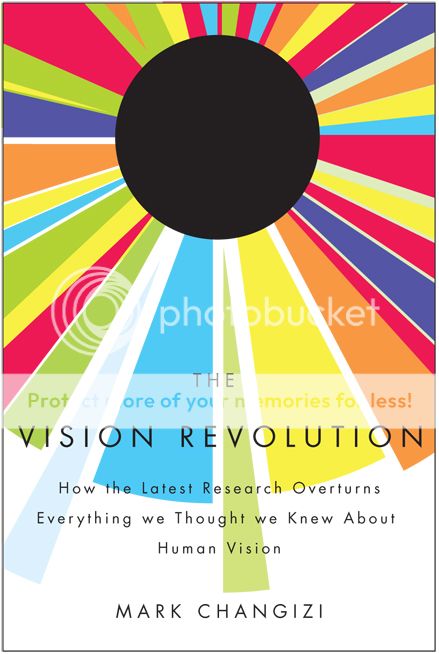
The Vision Revolution by Mark Changizi. ©2010 BenBella Books, all rights reserved
Dr. Mark Changizi, a cognitive science researcher, and professor at Rensselaer Polytechnic Institute, is one of the most exciting rising stars of science writing and the neurobiology of popular culture phenomena. His latest book, The Vision Revolution, expounds on the evolution and nuances of the human eye—a meticulously designed, highly precise technological marvel that allows us to have superhuman powers. You heard me right; superhuman! X-ray vision, color telepathy, spirit reading, and even seeing into the future. Dr. Changizi spoke about these ideas, and how they might be applied to everything from sports stars with great hand-eye coordination to modern reading and typeface design with us in ScriptPhD.com’s inaugural audio podcast. He also provides an exclusive teaser for his next book with a guest post on the surprising mindset that makes for creative people. Read Dr. Changizi’s guest post and listen to the podcast under the “continue reading” cut.
Earth Week REVIEW: DisneyNature’s Oceans
Apr0
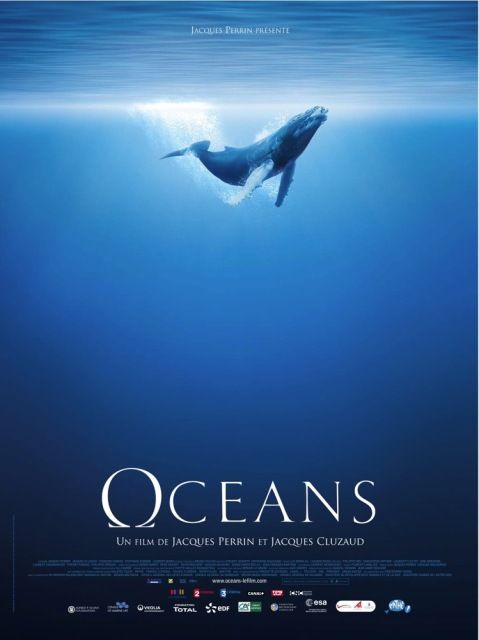
Oceans film poster and associated images ©DisneyNature Films, all rights reserved.
Happy Earth Week 2010, everyone! Here at ScriptPhD.com, we have devoted a number of articles to environment, sustainability and eco-awareness as part of our continuing “It’s Not Easy Being Green” series. This year, in celebration of the 40th anniversary of Earth Day, we are devoting the entire week to articles, interviews and profiles of companies, individuals and content that raises awareness of sustainability efforts and new ideas for the green science revolution. Because water lies at the heart of most modern environmental crises, we kick off Earth Week with CaptainPlanet’s review of the stellar new DisneyNature documentary Oceans, a truly spectacular oeuvre that celebrates the majesty of our most important and delicate resource. We also include a number of practical, easy things you can do right now to make a difference globally by acting locally. For our Oceans review and to find out what you can do to help protect our Earth’s water supply, please click the “continue reading” cut.
ScriptPhD Roundtable: Naturally Obsessed—The Making of a Scientist
Apr0
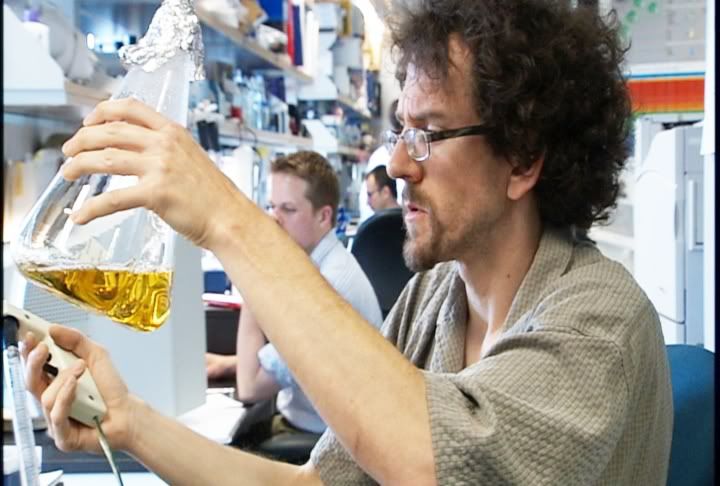
Graduate student Rob Townley mixes solution in a beaker in a scene from documentary "Naturally Obsessed: The Making of a Scientist." Film images ©ParnassusWorks Films, all rights reserved.
Society’s unequivocal fascination with science and scientists, reflected by a growing presence as staples of film, television, and popular culture, has only been magnified by the enigmatic (and seemingly impenetrable) aura in which they are enveloped. Their studies decidedly abstruse, their coded language unintelligible, their habits quirky and eccentric, the world of the scientist has been an audiovisual shroud of mystery—until now. In perhaps the most authentic, unfiltered, extemporaneous portrayal of scientists in their environment ever recorded, new documentary Naturally Obsessed: The Making of a Scientist welcomes the lay audience into the laboratory as silent observers. No reservations, no restrictions, no preconceptions. The result is an emotionally stunning masterpiece that connects us to scientists as people, reaches out across professional divides, and places PhD students, the backbone of the modern scientific laboratory, under the microscope for the first time. ScriptPhD.com recently screened the movie with a group of UCLA PhD biology students. Under the “continue reading” cut is our review, along with an honest roundtable discussion that included reaction to the movie, its parallel to their lives, and the training of modern scientists.
Science and Society: A Policy Analysis
Mar0
“The fewer the facts, the stronger the opinion.” —Arnold H. Glasgow, American humorist
In today’s modern, fast-moving world, large telecommunication and media corporations are playing an ever increasing role in shaping the collective consciousness of society. This development might lead us to ponder what role, if any, traditional pillars of learning such as law, science, medicine, literature and art have to contribute to society. How does society absorb these contributions during the ongoing media (and social media) blitz that has transformed how we obtain, process and share information. More importantly, what influence do these contributions have upon society, and what influence does society reciprocate upon these institutions? For our last (and best) post of Science Week, ScriptPhD.com examines the relationship between science and society, and extrapolates social policy and pop culture lessons that could shape and transform that relationship in the future. Please click “continue reading” for more.
Guest Article: A Pop-Culture Science Lesson
Mar0
All right class, settle down, settle down. My name is Mr. Ross, but you may call me BR. Welcome to Pop-Culture Science 101. I know what many of you are thinking: “Science is boring; I just don’t get it.” I can understand those sentiments. But that’s only because of the ways you’ve been taught in the past. Today is going to be different. On this, the third day of the Science Week collaboration between ScriptPhD and CC2K, we decided to have a bit of silly fun and cover a couple of traditionally esoteric science topics from an angle I doubt any of you have considered before—pop culture icons. So get out your notebooks and pens, today’s lesson begins now! Please click “continue reading” for more.
Discovering LIFE on Planet Earth—Editor’s Selection
Mar2
LIFE logo ©2010 Discovery Channel/BBC, all rights reserved.
In 2006, The Discovery Channel, in partnership with the BBC, premiered the 11-part Planet Earth, the most expensive natural history mini-series ever filmed, and the first in high definition. It gave viewers a sweeping, intimate overview of the Earth’s diverse natural habitats. Yet long before Planet Earth premiered, plans were already underway for its follow-up opus, LIFE, which would focus on the animals, insects, and creatures that call those habitats home. The result, four years in the making, is historic television—never-before-recorded mating rituals, survival scenes, and brutal savagery. For the naturalist and the nature-lover, LIFE will, quite simply, change your view of life. After the “continue reading” cut, we preview the first few episodes and offer a rare candid interview with executive producer Mike Gunton. We are proud to make LIFE on Discovery Channel an official ScriptPhD.com Editor’s Selection.


